Saturday, June 30, 2012

Will human ingenuity save the day? Technology and technologism
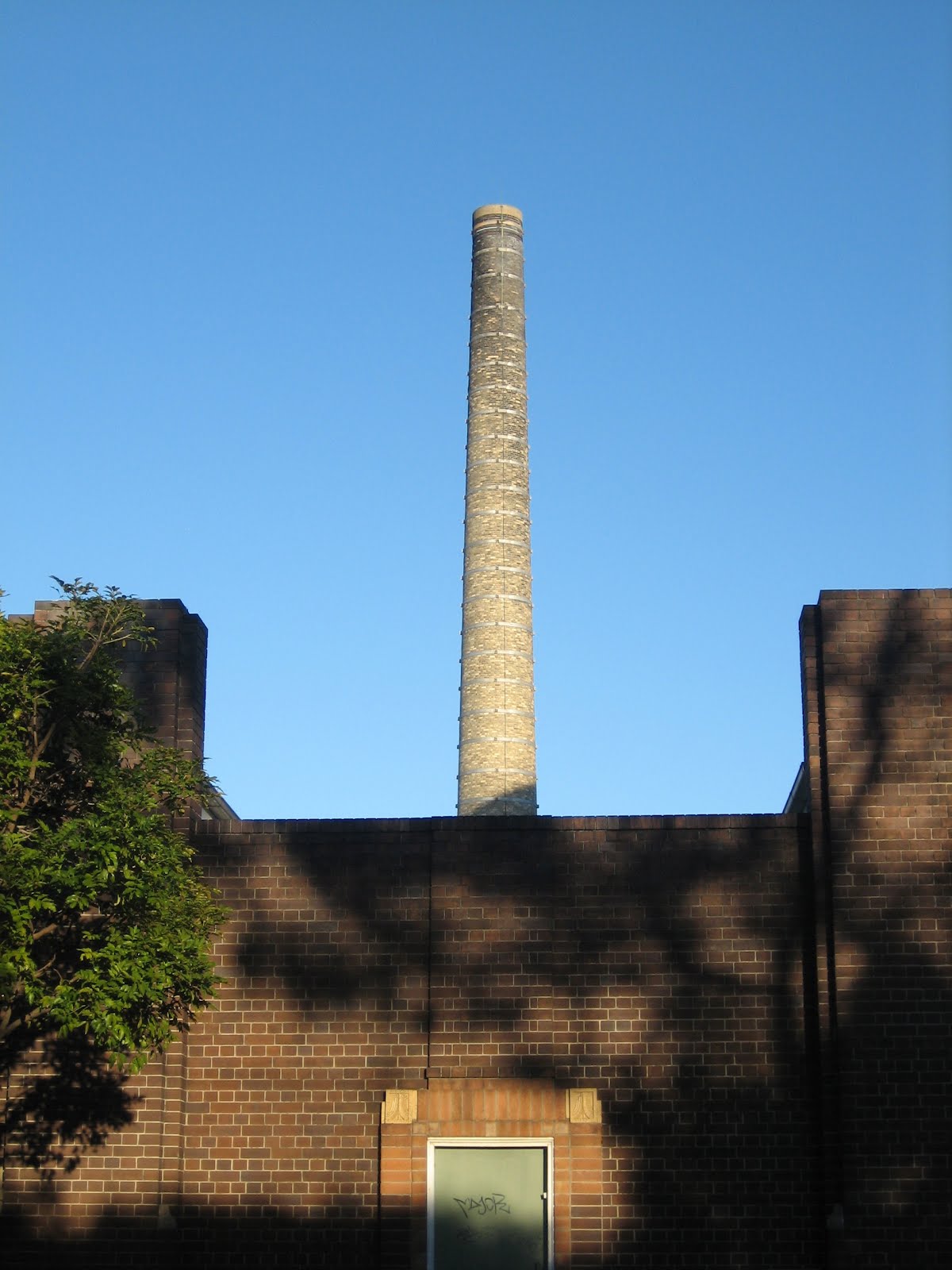
Technologism is the eclipse of wisdom by intelligence.

Like the difference between consumption and consumerism, the difference between technology and technologism is important. It is quite possible to consider both the "isms" to be forms of idolatry while not implying that all consumption or technology use is bad. I don't want to be consumerist, but I acknowledge and celebrate the fact that we all need to eat and wearing clothes is also generally a good idea. I don't want to be a technologist, but I acknowledge and give thanks for the fact that certain pieces of human ingenuity are capable of bringing significant, (albeit limited and often quite compromised) human goods in certain circumstances.

The "ism" in each case comes from treating the object (consumption or technology) as a transcendent or ultimate source of meaning, as a saviour, as a non-negotiable aspect of one's identity or in some other way, as a god. Consumption becomes treated as a god when we cannot imagine life without our conveniences and luxuries, when we build our major life decisions around the pursuit of higher incomes and more toys (even if this is sometimes dressed up in concerns for "financial security" or "providing every opportunity for my kids"), when we make the highest goal of politics the pursuit of rising GDP, when we identify ourselves through our purchases or find "retail therapy" to be the only way to get through the day, when metaphors and assumptions from marketing and economics saturate all areas of life. And so on. Technology becomes a god when it is seen as the highest pinnacle of human achievement, when it is treated as a non-negotiable of my identity or life goal, when it is treated as the "final solution" to all our problems, when we assume that every issue must have a technical answer, when we come to view ourselves as masters and commanders of all we survey, when it becomes a means of avoiding the messy business of relationships, justice and politics.

I don't have a problem with individuals championing certain ideas and techniques, nor with acknowledging the many and varied benefits that have come from the massive acceleration of technological changes in the last few decades. But it will not do to be a cheerleader for human ingenuity per se without acknowledging the fallen and finite grasp of the world that even our best efforts display. Every technology has brought with it costs as well as benefits, has changed our understanding of ourselves and our place in the world. Not all of these changes have been benign, and any new technology, no matter how glossy or initially attractive, is to be treated with measured caution.

If in thinking about responding to ecological crises our frame of reference excludes or minimises changes to lifestyles and cultural assumptions, demanding that there be a technological solution that enables us (in the rich, developed world) to keep on living at high and/or rising levels of consumption, then that's technologism. If we assume that there has to be a single technical response to complex social issues, rather than a broad combination of technological, infrastructural, policy, political, economic, cultural and personal changes, then that's technologism.

And if we face today's threats by holding desperately to the hope that tomorrow's genii will cook something up, placing onto future human ingenuity the expectation of salvation from the horrible mess we've made of things, that's technologism.

When technology is seen as saviour, as primary socio-political lever, as displacement of justice, as enabler of my unchallenged desires, as the primary source of identity, meaning or well-being, that's technologism.

And that's idolatry.

Thursday, June 28, 2012

Every artist is a cannibal - Sorkin is a self-cannibal


"Every artist is a cannibal,
Every poet is a thief.
All kill their inspiration
And sing about their grief."

- Bono, "The Fly" from Achtung Baby, 1991.

Wednesday, June 27, 2012

Hug the monster: fear and paralysis

"Sometimes the right metaphor can save your life." So claims Bill Blakemore in an article on (American) ABC news:
"'Hug the monster' is a metaphor taught by U.S. Air Force trainers to those headed into harm’s way. The monster is your fear in a sudden crisis — as when you find yourself trapped in a downed plane or a burning house. If you freeze or panic — if you go into merely reactive “brainlock” — you’re lost. But if your mind has been prepared in advance to recognize the psychological grip of fear, focus on it, and then transform its intense energy into action — sometimes even by changing it into anger — and by also engaging the thinking part of your brain to work the problem, your chances of survival go way up."*
These ideas resonate with part of my thesis argument. Fear is natural, unescapable and yet can be deadly if handled wrongly. Just as those faced by a life-threatening situation will fare much better if they can harness their fear in productive ways, so all of us, facing a civilisation-threatening situation, will fare much better if we can properly locate and use the fears that naturally arise when we hear of rising seas, falling water tables, disintegrating biodiversity and squandered resources. There is, however, an important difference between finding yourself trapped in a burning building and finding yourself trapped in a warming planet: timescale. The fear that needs to be hugged in the former case is based on adrenaline, and the threat is immediate, tangible, personal and avertable. In the latter, the threat is slow, largely invisible in the rich world (except to statisticians), impersonal and my efforts are but a drop in the ocean. And so the fear associated with ecological crises is a deeper, settled anxiety rather than a sweaty-palmed panic. Can we hug this monster in the same way that survivors learn to hug the adrenaline-fuelled variety?
*The same author also has an excellent follow up piece reflecting on the memorable quote from Thomas Hobbes, "Hell is the truth seen too late".

Tuesday, June 26, 2012

Why bother? On fighting a losing battle

"It is, perhaps, the greatest failure of collective leadership since the first world war. The Earth's living systems are collapsing, and the leaders of some of the most powerful nations – the United States, the UK, Germany, Russia – could not even be bothered to turn up and discuss it. Those who did attend the Earth summit in Rio last week solemnly agreed to keep stoking the destructive fires: sixteen times in their text they pledged to pursue "sustained growth", the primary cause of the biosphere's losses.

"The efforts of governments are concentrated not on defending the living Earth from destruction, but on defending the machine that is destroying it. Whenever consumer capitalism becomes snarled up by its own contradictions, governments scramble to mend the machine, to ensure – though it consumes the conditions that sustain our lives – that it runs faster than ever before.

"The thought that it might be the wrong machine, pursuing the wrong task, cannot even be voiced in mainstream politics."

- George Monbiot, After Rio, we know. Governments have given up on the planet.

George Monbiot reflects upon the outcomes of the recent Rio+20 conference, indeed upon the whole sweep of international negotiations since the first Rio conference, and reaches a healthy degree of pessimism. Our present political system is, apparently, incapable of performing the kind of deliberation required to implement policies consistent with its continuation beyond a fairly short timeframe. This much is not particularly news, though the failures at Rio only underscore the tragedy of our present situation.

However, I'd like to highlight the closing paragraphs of Monbiot's piece, where he turns to the question of giving up.
"Some people will respond by giving up, or at least withdrawing from political action. Why, they will ask, should we bother, if the inevitable destination is the loss of so much of what we hold dear: the forests, the brooks, the wetlands, the coral reefs, the sea ice, the glaciers, the birdsong and the night chorus, the soft and steady climate which has treated us kindly for so long? It seems to me that there are at least three reasons.

"The first is to draw out the losses over as long a period as possible, in order to allow our children and grandchildren to experience something of the wonder and delight in the natural world and of the peaceful, unharried lives with which we have been blessed. Is that not a worthy aim, even if there were no other?

"The second is to preserve what we can in the hope that conditions might change. I do not believe that the planet-eating machine, maintained by an army of mechanics, oiled by constant injections of public money, will collapse before the living systems on which it feeds. But I might be wrong. Would it not be a terrible waste to allow the tiger, the rhinoceros, the bluefin tuna, the queen's executioner beetle and the scabious cuckoo bee, the hotlips fungus and the fountain anenome to disappear without a fight if this period of intense exploitation turns out to be a brief one?

"The third is that, while we may have no influence over decisions made elsewhere, there is plenty that can be done within our own borders."
If we compare these reasons with the motivations of someone facing terminal illness, we find some parallels. Why continue any form of treatment when the result will still be death?

First, because sometimes, extending life is worth the effort. There are limits to how far this stretches, but particularly where there are still opportunities to bless and be blessed by others, then the pursuit of a longer life can be a faithful response. I think this is an important perspective, since, in the long run, a warming sun will see the end of all life on earth (perhaps in a few hundred more million years) and indeed entropy will ultimately see the heat death of the universe, making all efforts at sustainability ultimately contingent and temporary. Whether we manage to extend something like the present ecological order for another ten, hundred or thousand years can't hide the fact that change will come. But relative gains still matter. I may be certain of my own death within fewer decades than I have fingers, but I'm still willing to do things that make it more likely that I get onto my second hand, or even onto my second digit.

Second, because one never knows. Perhaps a miraculous remission may materialise after all and the terminal diagnosis turn out to be incorrect, despite all the odds. There are no guarantees of such an outcome, but the possibility remains open. If a cancer patient may hope for the sudden collapse of the tumour that threatens the life of the body, Monbiot is here hoping for the sudden collapse of the machine that threatens the natural world on which it relies. What would it look like for the machine of consumer capitalism to collapse before the collapse of natural systems? Is this an outcome that can be actively pursued or simply hoped for? Obviously, when talking about an politico-economic-cultural system, for it to collapse raises the question of what replaces it. Whether you think there are genuine alternatives that can be realistically implemented on pathways that maintain human flourishing without massive and violent disruption will largely determine whether you are a bright or dark green.

Third, because I might not be able to win the war, but battles can still be won or lost. I might be doomed to die, but symptoms can be treated. Monbiot goes on to speak of re-wilding as a strategy that can be feasibly pursued at a national or sub-national level even in the absence of international agreements. And perhaps there is value in such a move. But his three points leave me wondering: can these be extended? Are there more reasons to keep going, even when to all appearances it looks like a losing battle? I can think of three more.

a) It is the right thing to do. Even if unsuccessful in averting global tragedy, to live in ways that individually and communally show respect for the community of creation and acknowledge our finitude are simply to live in line with the truth about ourselves. Whatever the outcome, to live honestly is to live rightly.

b) The way of the cross is the way of light. Faced with suffering and difficulty, the Christian is called not to shrink back in self-protection, but to walk forward in obedient trust, seeking to love and care even where this comes at personal cost, based on a hope in the God who judges justly. We are not to conform to the pattern of the world - neither its hyper-consumption nor its catastrophist resentment - but to be transformed by the renewing of our mind. What does it look like to deny myself and take up my cross in a world threatened by converging ecological crises? The answer will be complex, though some of the first steps are clear enough.

c) We look for the resurrection of the dead and the life of the world to come. Hope for the renewal of all things is not a get out of gaol free card that justifies a life of selfish indulgence, but a summons to live in the light of the future. If God refuses to abandon his good creation, neither can we.

UPDATE: Reposted at Ethos.

Monday, June 25, 2012

Surviving Progress: Are we walking into our own trap?

"Things that start out to seem like improvements or progress, these things are very seductive; it seems like there's no downside to these. But when they reach a certain scale they turn out to be dead ends or traps. I came up with the term 'progress trap' to define human behaviours that seem to be good things, seem to provide benefits in the short term, but which ultimately lead to disaster because they are unsustainable. One example would be - going right back into the old stone age - the time when our ancestors were hunting mammoths. They reached a point when their weaponry and their hunting techniques got so good that they destroyed hunting as a way of life throughout most of the world. The people who discovered how to kill two mammoths instead of one had made real progress. But people who discovered that they could eat really well by driving a whole herd over a cliff and kill two hundred at once had fallen into a progress trap; they had made too much progress."

- Ronald Wright, author of A Short History of Progress


A 2011 documentary produced by Martin Scorsese and directed by Mathieu Roy and Harold Crooks (The Corporation) called Surviving Progress was aired by the BBC over the weekend and for the next week is available on BBC iPlayer to UK residents (others can try here). Drawing on a wide range of interviewees including David Suzuki, Stephen Hawking, Margaret Atwood, Marina Silva and Jane Goodall the 82-minute documentary was inspired by a book by Ronald Wright called A Short History of Progress and investigates the reasons that our attempts at progress are sometimes tragically short-sighted. Are our attempts to catch more mammoth doomed to failure? Thought-provoking and beautifully if sometimes indulgently shot (with Scorsese as producer, I don't think they were short on money), the conclusion packs a slightly larger punch than the usual five minutes of feel good "we can change the world", though is still likely to leave you frustrated and wanting more. Two personal highlights are the rant by Vaclav Smil (starting at 69:40) and the great one-liner from David Suzuki: "Conventional economics is a form of brain damage." (which appears at the end of a speech starting at 53:45.) The final shot is nicely ambiguous, though to appreciate the full implications, you have to watch from the start. I doubt you'll regret doing so.

Tax dodging is dodgy

Back here and here, I've been collecting links to articles discussing tax avoidance and evasion. It is indeed a widespread and complex problem and a single petition is unlikely to achieve a breakthrough, but ongoing political pressure on this topic is not pointless as incremental improvements can certainly be made. So here is today's petition (to the UK government).

Friday, June 22, 2012

Australian media: what a week


This week has been a momentous one in Australian news media. The two largest print media corporations (Murdoch's News Ltd and Fairfax) have both announced major restructuring leading to more than 3,000 job losses. Furthermore, the world's richest woman and Australian mining magnate Gina Rinehart has announced her intention to take a controlling share of the beleaguered Fairfax. Rinehart has made it clear that her goal is not profit, nor public service but influence, and she intends to exert editorial control, refusing to sign the Fairfax Media Charter of editorial independence. The implications of these changes are wide ranging and yet the precise shape remains uncertain. Rinehart is a noted climate dissenter and fierce opponent of the government's superprofits mining tax. I am no particular fan of Fairfax media, but am not feeling very confident that it will improve under Rinehart. Indeed, if I look at the Sydney Morning Herald (SMH) pieces I've linked to over the last few years, I wonder how many would have made the cut under Rinehart's hand. Perhaps we may have little difficulty anticipating more voices like Andrew Bolt and his serial disinformation. It will be interesting to see whether those like Elizabeth Farrelly or Ross Gittins remain.

The week's events have only made me feel more favourably towards The Conversation (which I introduced back here), a not for profit news media site set up by CSIRO and five universities (with a few other corporate partners) that runs ad-free, is editorially independent and with nearly all contributions by accredited experts in the subject who have to declare all potential conflicts of interest next to their article. And just today I've realised that they also publish all their material under a Creative Commons license, meaning it can be republished for free (under certain very non-onerous conditions).

Here are some perspectives on these developments that appeared this week at The Conversation:

Malcolm Fraser: Does it matter who owns our papers? Yes it does.
Malcolm Fraser was Australian Prime Minister between 1975 and 1983 for the more conservative of Australia's two main parties.

Stephan Lewandowsky: Rinehart’s tilt at power is bad news for public debate.

David McKnight: Gina Rinehart and Rupert Murdoch: a study of power in the media.

Andrew Jaspar: Fairfax or Gina-fax? Let’s have the debate before it’s over and Media earthquake: panic, disinformation, and competing visions at Fairfax and News.
UPDATE: GetUp are running a simple survey on public attitudes towards Fairfax, which will take less than 60 seconds.

Thursday, June 21, 2012

The privilege to know

"Those who have the privilege to know have the duty to act and in that action are the seeds of new knowledge."

- Albert Einstein.

I have offered some reflections before on the topic of what we do with what we know and the responsibility that comes with awakening to a better grasp of the world, ourselves and the time in which we live. This Einstein quote very helpfully ties this movement from knowledge into action back into a virtuous circle where responsible action is itself the basis of a further awakening.

So, even where we are not in command of all the relevant knowledge and may be even somewhat uncertain about the knowledge we do have, then taking responsibility for discerning a loving, faithful, hope-driven response is itself the best way of discovering that our capacity for action exceeds our expectations and fears, and for opening our eyes to new facets of the world in which we live and love.

Tuesday, June 19, 2012

Rio +20

Much can be said about this conference, and I'm sure plenty will be over the next few days. For the moment, I will confine myself to this quote and link:

"To see Obama backtracking on the commitments made by Bush the elder 20 years ago is to see the extent to which a tiny group of plutocrats has asserted its grip on policy."

- George Monbiot, Rio 2012: it's a make-or-break summit.
Just like they told us at Rio 1992
.

Friday, June 15, 2012

Looking back on collapse: another documentary


The Romans, the Maya, the Anasazi, Rapa Nui (Easter Island), Norse Greenland and many more: dozens of previous civilisations have reached a point where they have undergone more or less rapid and irreversible transition from high to low social complexity, usually known as societal collapse. I've blogged before about two of the best-known theorists of societal collapse, Joseph Tainter and Jared Diamond and have just come across a recent documentary called 2210: The Collapse? in which the ideas of Prof Tainter and Prof Diamond are quite usefully summarised into a 93 minute presentation. Some of the documentary's framing, with 23rd century archeologists trying to piece together the causes of the collapse of our present global industrial society (à la Age of Stupid), gets a little repetitive and gimmicky, but the ideas are important and the presentation lucid. We are not exempt from the brutal logic that placed temporal limits of previous civilisations. But we are in a unique situation: with a global economy, any future collapse will likely be global and with seven billion or more now alive, that's a lot of eggs in one basket. Put it on your "to view" list.

Wednesday, June 13, 2012

I will show you fear in a handful of dust

Groundwater depletion. A new study has calculated that the biggest single contributor to sea level rise over the last fifty years has not been melting ice from Greenland or Antarctica, nor melting glaciers, nor even the expansion of the oceans as they warm, but groundwater depletion. This helps to plug a previously puzzling hole between the observed rate of sea level rise over recent decades and estimated contributions from these other sources. Of course, there is an even bigger problem in many places that results from taking groundwater at a rate faster than it is replenished: running out. For three decades, Saudi Arabia used to export wheat grown in its deserts with water extracted from fossil aquifers (i.e. groundwater that fell as rain thousands of years ago and unlikely to be replaced anytime soon). In the last few years, its wheat production has collapsed and is expected to cease entirely by 2016. As a result, it is buying up productive land in Africa, which results in various other problems: dispossession of traditional owners (who may lack adequate documentation of land ownership), corruption of government officials involved in a lucrative business, reduction of local food stability and so on.

Economic collapse? An update to the 1972 Club of Rome study done by researchers at MIT predicts global economic collapse by 2030 on our present unsustainable trajectory. Much discussed, debated and derided at the time, the computer predictions of the 1972 publication The Limits to Growth, have been tracking well with historical data over the last few decades and their timeframe of very serious ecological and resource problems by 2030 do not need to be substantially revised, according to the new study.

Australian droughts and floods: A land of (more extreme) droughts and flooding rains? This is an excellent intro to the hydrological effects of climate change on Australia and is the first in a recent series on hydrological changes in Australia. Parts Part Two, Three and Four.

Biodiversity decline: EU farmland bird numbers have dropped by 50% over the last thirty years, largely due to farming policies.

2011 CO2 emissions update: John Cook outlines IPCC and IEA scenarios for different emissions trajectories we could follow. Note that the very best (and most difficult) ones still involve major disruption and difficulty in a harsher and less predictable world. They are also likely out of reach without radical and rapid shifts in the global political and economic climate.

UK Climate Policy: George Monbiot traces the latest watering down of UK climate legislation. The UK's Climate Climate Act passed in 2008 with very close to unanimous support, making it the first piece of national legislation setting targets for greenhouse gas emissions reductions in the world. When originally introduced in late 2007, the bill called for a 60% reduction by 2050, but this was increased to 80% on the urging of NGOs, church groups and a Royal Commission.

Great Barrier Reef: The UN has warned that the reef's World Heritage status will be downgraded to "in danger" if Queensland goes ahead with a slew of further port developments to expand the coal and natural gas industries. This article helps to lay out the political context and puts the debate in context, distinguishing between short and long term threats to the reef. It is quite possible to lose the wood of carbon emissions for the trees of maritime traffic. While a major accident would be a disaster, having an increasing number of coal ships successfully reaching their destinations ensures a long term catastrophe through warming and acidifying oceans. Australia's recently announced major marine reserve expansion, while praiseworthy, will do little to save the reef.

WA Forest collapse: "ecosystem change can be sudden, dramatic and catastrophic". Western Australia is rapidly losing its (remaining) forests. The south-west of Australia has experienced some of the most obvious changes in precipitation anywhere in the continent, with a fairly sudden step-change occurring around 1970: "Groundwater levels have fallen up to 11 meters in some forested areas, with larger decreases in populated areas."

Cane toads: A new development with the potential to start turning the tide against Australia's second most destructive introduced species. H/T Mick.

Saturday, June 09, 2012

A busy age of laziness

It is customary to complain of the bustle and strenuousness of our epoch. But in truth the chief mark of our epoch is a profound laziness and fatigue; and the fact is that the real laziness is the cause of the apparent bustle. Take one quite external case; the streets are noisy with taxicabs and motorcars; but this is not due to human activity but to human repose. There would be less bustle if there were more activity, if people were simply walking about. Our world would be more silent if it were more strenuous. And this which is true of the apparent physical bustle is true also of the apparent bustle of the intellect. Most of the machinery of modern language is labour-saving machinery; and it saves mental labour very much more than it ought. Scientific phrases are used like scientific wheels and piston-rods to make swifter and smoother yet the path of the comfortable. Long words go rattling by us like long railway trains. We know they are carrying thousands who are too tired or too indolent to walk and think for themselves. It is a good exercise to try for once in a way to express any opinion one holds in words of one syllable. If you say "The social utility of the indeterminate sentence is recognized by all criminologists as a part of our sociological evolution towards a more humane and scientific view of punishment," you can go on talking like that for hours with hardly a movement of the gray matter inside your skull. But if you begin "I wish Jones to go to gaol and Brown to say when Jones shall come out," you will discover, with a thrill of horror, that you are obliged to think. The long words are not the hard words, it is the short words that are hard. There is much more metaphysical subtlety in the word "damn" than in the word "degeneration."

- G. K. Chesterton
H/t Dave Taylor.

Guilty as charged.

Thursday, June 07, 2012

Empathy and Energy: a new revolution is required


Here's a fascinating 50 minute talk from a creative, insightful and controversial thinker, Jeremy Rifkin. As he mentions in the talk, he's an advisor to the European Parliament, which has formally endorsed the energy plan he has outlined here. But while he ends on energy, the core of the talk is about empathy and the significance of empathy in history and human society. I won't attempt to summarise his argument, but commend it as a very interesting thesis.

A couple of my reflections on the talk (and you may wish to listen to it yourself first): he's massively oversimplifying (of course),* but I buy the basic idea that energy revolutions are correlated with revolutions in consciousness and social organisation. I also buy the critical significance of empathy for ethical deliberation and intuition. I'm not sure I'm yet convinced about the technical feasibility of transforming our energy infrastructure to a distributed system without also transforming our expectations of energy. That is, the kind of distributed energy system he presents may well be technically possible (though few engineers seem to share his optimism about hydrogen fuels), but whether it can deliver even present levels of energy consumption per capita for a rising population is another matter (let alone provide for ongoing growth in energy consumption). It is also not clear whether it can be exported to areas of the world with higher population densities (e.g. India and China). At one point Rifkin seems to imply that retrofitting every building in Europe is what is going to ensure ongoing economic growth, meaning that for him, economic growth seems to be a sine qua non of any positive path forward. In this way, I think he's still stuck in 19th/20thC thinking. Yet his reference to beef production/consumption and the failure of any national leader to mention its contribution to climate change does imply that he's keen for cultural transformation at least insofar as diets are concerned. I'd like to apply the same thinking to energy consumption. It is quite possible to live a flourishing and enjoyable life on far, far less energy than the average consumption of the developed world (even Europe, which consumes roughly half the energy per capita of the US or Australia). But trying to rebuild our energy infrastructure without also changing our energy consumption patterns is likely to be only a halfhearted affair.
*Not least in his sketch of theological anthropology and the transference of all ethical considerations into an otherworld. Sounds like he's been reading too much Nietzsche and not enough actual theology.

Perhaps most critically of all, I'm fairly pessimistic about the political feasibility of implementing the infrastructural changes he advocates on the timescale required to avoid ecological and climatic changes that will render such grand projects ineffective at helping to build a stable society, especially in the face of massively wealthy fossil energy interests who show almost no sign of the empathetical sensibility discussed here. Of course, political winds can shift quickly, and so I do think that seeking to effect cultural and political transformations that can enable the industrial and infrastructural changes he's talking about is a very worthy goal. Yet he doesn't seem to be (at least here) confronting the social, cultural and political barriers to these changes.

Nonetheless, I think there's much here that is worth sharing and pondering further, not least the idea that unless our capacity for empathy can extend beyond parochial, generational and even species ties, then we're in for a very rough century.
H/T Lorna.

Sunday, June 03, 2012

Play, property and friendship

I generally try to avoid blogging about our two-and-a-half-year-old daughter A, since (a) all parents find their own progeny to be far more interesting than most people find someone else's, (b) I don't really want to populate the internet with embarrassing stories from her childhood and (c) my wife already does a fair bit of it over here. But today I am making an exception to recount an incident that occurred recently, which is actually mainly about the (anonymous) mother of another child.

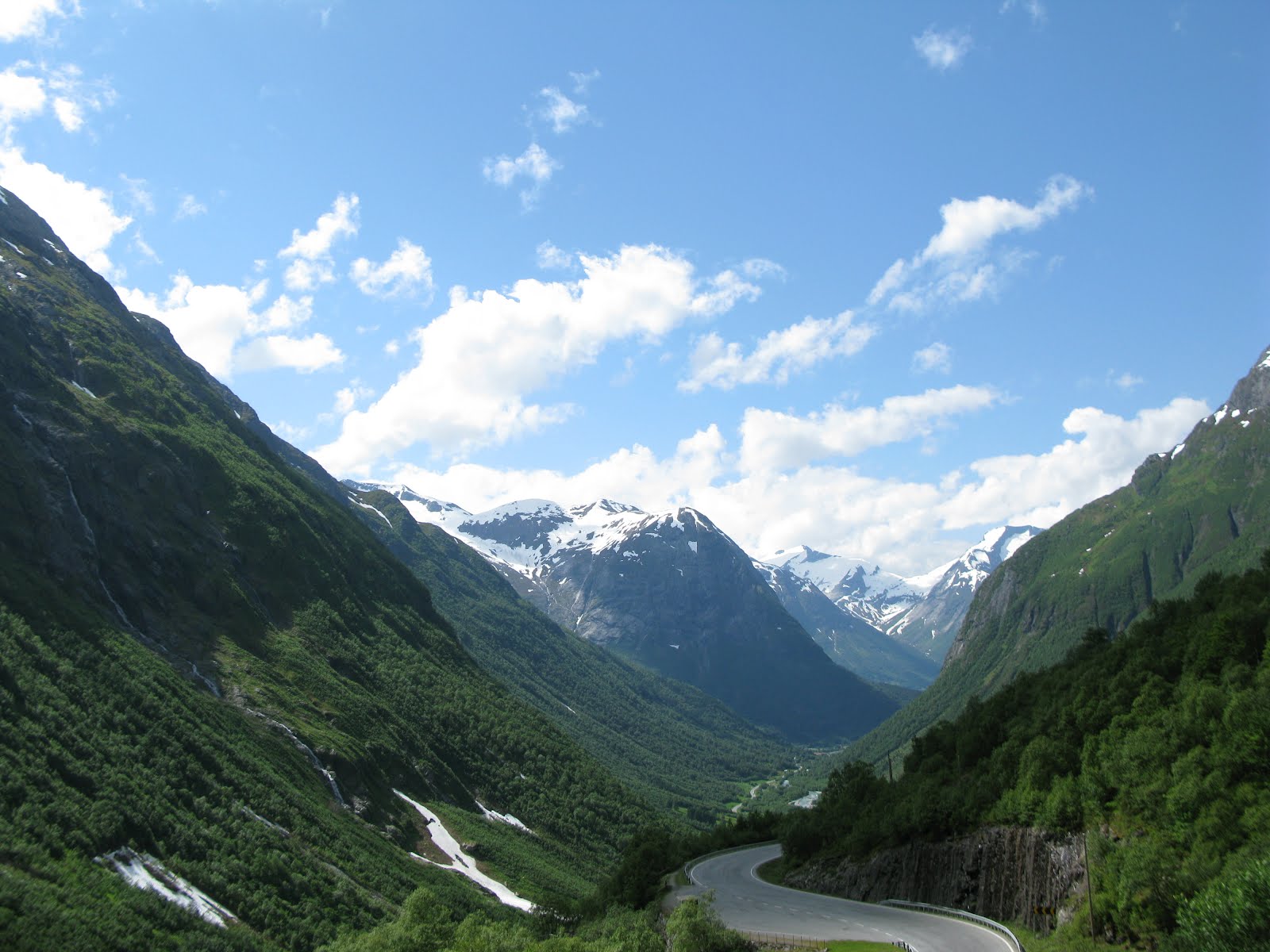
A and I were having a delightful time playing at a favourite local playground (the images show the view from this park, albeit last Autumn). We were approached by another little girl, who turned out to be a three year old called E. Little E was delightful: friendly, confident, inquisitive, communicative, sensitive, respectful - in short the very model of what I would hope A is like at that age. Being slightly older, she was able to initiate and demonstrate many of the fundamental skills required for building a friendship. A was quickly besotted and having a great time gladly sharing her toys with her new buddy. E would occasionally run back to her mother to get another biscuit while A was eating some grapes out of a container.

E then suggested that she and A might go for a walk to play in another part of the playground. There followed a brief negotiation where E offered to carry some of the items that A often likes to take with her at the moment (a small bag and a tiny basket). A declined and said she'd prefer to hold them herself. E then offered to carry A's container of grapes in order to facilitate the move. This was gladly accepted and off they went, A only pausing momentarily to turn and wave goodbye to me. I let them go, confident that they would still only be metres away and in sight of perhaps a dozen other parents, while thinking that it might be good for A to have a little space to observe the new relational skills without me looking her shoulder.

Ten seconds later, I heard angry shouting.

It took another couple of moments for me to realise that the shouting was directed at E. Her mother was very loudly berating her for purloining another child's property, telling her to "return the grapes at once" and to apologise for taking them.

I ran to clear up the confusion. E's mother was dragging her by the hand to find the owner of the stolen goods while, unnoticed, A trailed after them looking very confused. E was sobbing loudly and A was on the verge of doing likewise.

I tried to explain as briefly as I could, highlighting just how exemplary E's behaviour had been and that the grapes were freely shared, not pilfered. The mother, realising her mistake, turned to comfort E, though without apologising to her. I tried to help A understand what had happened. When E's mother went off chasing an even younger child moments later, E stayed and was able to articulate that her mother had misunderstood and that her anger was clearly unjustified.

Ten minutes later, the two girls were very happily playing again and E's mother expressed her embarrassment and regret to me. Whether she apologised to E I am unsure, though in her defence I do suspect that the incident was out of character, not least due to how well adjusted and emotionally intelligent E appeared throughout the whole episode, indicating the likelihood of some emotionally intelligent parenting. So the following point is not really about this mother in particular, but uses this morning as an attempt to illustrate something broader.

First, it is worth noting that at one level, both E's mother and I were motivated by concern for the other's child. She didn't want A to have had her goods stolen and I didn't want E falsely accused. At a deeper level, we were presumably also both even more concerned about our own child's moral formation. She didn't want to raise a thief. I didn't want my child to think twice about sharing her blessings with others.

So what then differed? Our vision of the world in which these moral concerns were expressed. Now obviously, I was privy to the earlier interaction in which A had freely accepted E's offer to carry the grapes while E's mother was not and so I had a better idea of how to "read" the sight of E carrying food that didn't belong to her. But I wonder whether there might not be more to the difference than this.

The experience lead me to reflect upon our culture's obsession with private property. Why would this mother (who as far as I can tell, was otherwise sane and sensitive) react so explosively to seeing her child holding an unfamiliar object? The outburst may perhaps have had its origins elsewhere: frustration at the younger sibling or at some other unrelated situation which found its unjust expression against E. But the fact that the trigger for this display was an apparent breach of ownership rights concerning a tiny handful of slightly soggy grapes could also suggest that the policing of the concept and practices of exclusive property is very important for E's mother, so important that she would trample all over a nascent friendship to enforce them. Property is an important ethical concept, but it is possible to get a little too excited about it and lose sight of the bigger picture.

Thursday, May 31, 2012

Religion and babies: are believers to blame for overpopulation?

In the context of rising global population (see my more detailed comments here), what effect does religious affiliation have on fertility?

Hans Rosling is one of the key figures behind the fascinating work at GapMinder, which aims to bring global statistics to life for ordinary people. He is something of a regular at TED and his talks are always entertaining and interesting. I have posted a few before.

Warning: the method he uses is applicable only at the broadest (national) level and so flattens some interesting exceptions, but other more detailed studies do support his basic claim here.

Thursday, May 24, 2012

Three things I didn't know about India

India, as the world's second most populous nation (soon to overtake China), has challenges that match its scale. Amongst them are poverty, ethnic and religious tensions, severe water stress and widespread malnutrition. Yet for the last few decades India has been experiencing a huge economic boom, fairly consistently posting GDP growth rates amongst the highest in the world.

This much I already knew. But I recently came across this article, (H/T Colin) which looks at Indian nutrition and points out some rather surprising (at least to me) realities. Here were three things I didn't know:

  1. There are more malnourished children in India than in all of Africa.
  2. Indian nutrition figures have declined significantly since the 1970s, despite rapidly rising GDP.
  3. Urbanisation is often a very big step backwards nutritionally for the poorest, despite bringing (on average) a large rise in income, due city living having much higher costs.
The causes, consequences and possible responses to these challenges are complex and it is not my intention to address them just now. Yet reading this piece has reminded me once again why GDP is insufficient on its own as a measure of social health. It is possible for GDP and something as fundamental as nutrition to be heading in opposite directions, even over a country as large as India and over the space of four decades (ensuring this isn't a statistical blip based on small sample size).

So next time a politician tries to scare you or bribe you by referring to "the economy", remember the limitations of GDP.

Thursday, May 17, 2012

People and Planet: a new report and other stories

Royal Society report (Summary and recommendations) calls for both population stabilisation and big cuts in consumption to avoid "a downward spiral of economic and environmental ills". This is a significant contribution to the discussion of the relationship between population and consumption (which I discussed back here). I haven't had a chance to read the full report yet, but the conclusions seem to be broadly consistent with the points I made: that both population and consumption need to be addressed, but the latter can be addressed faster, further and with fewer ethical conundrums and so ought to be the primary immediate focus.

Guardian: IEA warns of 6ºC rise. It is hard to get a handle on just how catastrophic 6ºC would be. Let's just say that if we get to 6ºC, I don't think we'll be doing cost-benefit analyses anymore. David Roberts reflects on whether 6ºC is alarmist or realistic and points out that science alone can't tell us how bad climate change will be - because the most important unknown is just how we are all going to act and react over the next couple of decades. Those who think that 6ºC by 2100 is entirely unrealistic implicitly assume either (a) massive global co-ordinated action to mitigate through aggressive emissions reductions across the board or (b) global and long term economic collapse arriving sooner rather than later.

Mongabay: Organic agriculture has lower yields than industrial farming, according to a new study in Nature, especially for grains, though that is not the whole story, since there are various downstream costs of industrial agriculture that reduce yields elsewhere (and elsewhen).

ScienceDaily: Plastic in ocean underestimated by at least a factor of 2.5 due to the effects of wind pushing pollution beneath the surface, rendering measurements and calculations based on skimming the surface inaccurate.

SMH: India's border fence. Not with Pakistan or China, but the 4,000 km militarised fence on the border with Bangladesh, in the face of a rising tide of people fleeing, amongst other things, a rising tide. Though speaking of that rising tide...
H/T Donna.

ABC: Australasia at hottest for (at least) 1,000 years (also in the Guardian and the original study is here). This is a significant finding since most temperature reconstructions have focused on the northern hemisphere, where a greater number of proxy records mean more data is available.

Science: Some good news from Greenland. A review of ten years of satellite data appears to indicate that we are not on track for the "worst case" (i.e. 2 metre) sea level rise by 2100. Of course, "good" is relative; even a rise of a few feet will lead to massive headaches, but multi-metre rises probably mean infrastructure vulnerabilities worth trillions. Sea level rise is one of the most serious long term effects of climate change, though I suspect that over the next few decades it is not going to dominate in comparison with, for example, concerns over food security.

Grist: What would it look like for media to take climate seriously? A very interesting conversation between two journalists about media coverage of the climate threat.

Saturday, May 12, 2012

Assorted opinions

The Conversation: Celebrating 150 years of captivity. I am increasingly uneasy about the ambiguities involved in most zoos. This piece articulates a number of them succinctly.

NY Mag: Sugar Daddies. Sugar Daddies are "private donors or their privately held companies writing checks totaling $1 million or more (sometimes much more) in this [US] election cycle." Some profiles on those spending most to influence the 2012 US presidential election.

Biologos: Thinking aloud together (part 2, part 3). Scot McKnight ponders how to get scientists and pastors talking about the implications of evolutionary biology and human origins.

Rachel Held Evans: 15 reasons I left church. Though many are quite US-centric, these are worth pondering. I'm sure I could add a few more.

Stephen King: Tax me, for F@%&’s Sake!. Multi-millionaire horror writer joins Warren Buffet and numerous other super-rich figures in calling for much higher taxes on themselves. King brings his own (very profitable but not always highbrow) blend of narrative shock and awe to the argument.

ABC: Why we hate Gillard so much. "[T]here are three pertinent distinctions between this government and the Howard Government: it is a Labor Government, it is a minority government, and the current prime minister is a woman."

Brad reflects on economies of deception - "When the pursuit of profit becomes a self-justifying end, truth becomes a readily dispensable commodity, because truth will not maximize profit" - and reviews the important book Merchants of Doubt.

Friday, May 04, 2012

Destroying the world's most successful killing machine

Humans killed by sharks annually: 5.

Sharks killed by humans annually: 100,000,000.

Source, based on this study and others (see comments for more).

This discrepancy points to a common feature of our predicament, the often vast gulf between our usual assumptions (sharks are a dangerous animal) and our rapidly changing situation (during my lifetime, literally billions of sharks have been killed and their populations have fallen off a cliff, declining by somewhere in the region of 90%). The fact that sharks are survivors from the Silurian period (making them roughly twice as old as the oldest dinosaurs! And there is some evidence that they may be even been around during the Ordovician) and yet our actions are having such drastic effects during the blink of a geological eye highlights just how powerful we (collectively) are. We have truly become a force of nature. I get the impression that few people have really grasped emotionally how shocking and radically novel this new situation is.

There seems to me to be a misunderstand claiming a particularly Christian character holding back such understanding, namely, the idea that it is somehow arrogant to think that puny little humans can have such large, planet-wide effects. Yet true humility is really an extension of the virtue of honesty. There is no virtue in pretending to be something other than we are. Romans 12.3 says "Do not think of yourself more highly than you ought" but does not go on to say "but think of yourselves as lowly worms, capable of nothing and worth even less". Instead, the second half of the verse is "but rather think of yourself with sober judgment". Sober judgement is what is needed. We have all kinds of reasons to be humble - from dust we came and to dust we return - yet let us acknowledge that various historically novel quantitative developments over the last few decades have brought us into a qualitatively new relationship to the rest of the natural world. To do so is not arrogance, but sober judgement. And when we notice that this relationship is increasingly one of destruction, then the potential for arrogant boasting of our powers is quickly chastised.

The title of world champion apex predator, held for over 400 million years by sharks, is now ceded to homo sapiens sapiens, who will be doing well if we can make it through the next 400 years without being the cause of another mass extinction.

Shark Extinction The Shocking Truth
Created by Surfmeisters.com Surf Blog | Surf Videos | Havaianas

Friday, April 27, 2012

Confirmation bias: why I am suspicious of "good" news

The link between poverty and the dangers of our ecological predicament is an important one. Not only are those least responsible for causing the threat already (in general) suffering the early effects, they will (in general) be more vulnerable to worsening climate and ecological impacts. When we add in future generations and other species, then we have three groups who contribution is negligible or even zero but who are very likely to face the most severe effects. The temptation to motivated reasoning that justifies our present behaviours and cultural assumption needs to keep these groups firmly in mind if we are to assess our responsibilities honestly.

One important form of motivated reasoning in this context is confirmation bias, which is a well-established psychological pattern in which we evaluate new experiences and claims through our existing assumptions, preferences and convictions. We all tend to give greater weight to experiences and evidence that confirms what we already believe, rather than those things that disconfirm it, hence we all have a bias towards confirmation.

Particularly for those of us who are rich and comfortable (by global standards) or who hold a belief that we ought to be and/or can soon be, then we have a preference for things to stay as they are (more or less), or at least not to change too quickly. We don't want scientific results that imply doom and gloom to be true, particularly if they also imply our responsible for such outcomes and/or the possibility of mitigating the threat through modifying our habits and assumptions. We are likely to latch onto experiences and claims that help to confirm that preference and to pay less attention to experiences and claims that challenge it.

This is a moral temptation involving our perception of the world. If it is the case that gross injustices exist all around us, and that climate and ecological crises are very likely to contribute to exacerbating them in various ways, then we can be tempted to downplay the moral importance of this information. This might be by denying the science, by saying that we can't do anything about it, by saying that we should focus on a more narrowly defined set of moral concerns (e.g. purely national interest, or perhaps what is directly relevant for me and my family), by claiming that technology will rescue us from any bad consequences and so on. I would argue that part of Christian discipleship is learning to resist such temptations in order to keep having the horizon of our moral vision, to keep discovering that we are neighbours even to those who might not initially appear to be one of "us". The three groups I mentioned - the global poor, future generations and other species - each challenge us to expand the margins of our moral community, to discover neighbours we didn't realise we had. By focussing on what climate change and ecological degradation means and will mean for these groups, whose moral position is most devastatingly unfair, we can seek to foster a deeper and broader empathy and so nurture a richer moral imagination, capable of seeing more clearly the world through the eyes of others.

Asking "what's in it for me?" or "how am I threatened by climate change?" may, depending on one's ability and willingness to look carefully at the implications of the science, produce apathy, or fear and anxiety, or greed, opportunism and tokenism. But asking, "what are the implications for my neighbour, particularly those most vulnerable?" will lead in a very different direction, to a deep concern for others whose present and future flourishing is deeply dependent upon the choices we make yet whose ability to benefit us (at least in ways that generally enter into calculative reason of cost-benefit analyses) is severely limited.

In short, I believe that our climate and ecological crises are manifestations in the social and ecological realms of the visible and outward costs of the idolatry of consumerism and the hubris that sees humanity as exercising mastery over all things, rather than fulfilling the Genesis mandate in the pattern of Christ's rule: by being the servant of all. If this is true, then the temptation to read our predicament as something less than a spiritual crisis will be strong, since we don't like to confront evidence of our own moral failures. We want to believe that it is not as bad as all that, that the danger is still far off, that we are really helpless and bear no responsibility, that we'll find some techno-fix to ensure we don't need to look inside our hearts to see the pollution spreading within that is the root of the pollution without: the physical pollution we breathe and drink and eat and which is presently dissolving the bonds of the community of life.

Of course, it is possible that it is not as bad as all that, that the risk is less imminent than the science suggests, there we truly are impotent in the face of calamity, that a silver bullet (or silver buckshot) wonder technology (or suite of technologies and economic policies) will mean we can keep on going more or less as we are without challenging consumerism. But because we really *want* these things to be true, we ought to be especially suspicious of claims and experiences that encourage us to hold them, constantly testing whether we might be engaged in wishful thinking, motivated reasoning, confirmation bias. Instead, as Christians shaped by the knowledge that faithfulness means constant repentance (our daily bread is confession and reception of forgiveness as much as any wheat-based product), we ought to hold an epistemology that expects true knowledge of the world will frequently reveal us to be in the wrong and in need of repentance and forgiveness.

Of course, this is not an exhaustive account, and it is important to acknowledge that prior to fallenness comes divine blessing on human participation in naming and understanding a good world. I offer no council of epistemological despair or unending scepticism. The suspicion of which I speak serves a positive purpose in service of neighbour and represents a modulation of God's "yes" to the created order, not a displacement of it by a mistrustful "no".

Nonetheless, we walk in the path of one who warned that following him would mean denial of self and carrying a cross. Anything that suggests the path of faithfulness requires the defence of my material prosperity, ease and luxury needs to be double and triple checked. There is no route to resurrection that does not involve mortification.

I am therefore suspicious of pieces of "good news" that purport to minimise our responsibility or the gravity of our situation. Sometimes, they may well be true, but the good news is that following a crucified and risen Lord means being able to look at my and our failings honestly, confident in the knowledge that they are already forgiven, that I am already being empowered to walk a new path, one that is honest and life-giving.

Thursday, April 26, 2012

Always look on the bright side of life?

This is the first in a five-part series (parts two, three, four, five) that addresses a topic close to my heart: the importance of bad news and the strategic mistake of attempting to focus purely on the "bright side" of the cultural and infrastructural changes demanded by ecological crises. While frequently pointing out the kinds of steps involved in a healthy response is important, as is reflecting on the opportunities to embrace a better life afforded by our dire situation, nonetheless, unless we honestly face up to how serious and well-developed the threats we're moving into are, then any positive response is likely to remain shallow, ever tempted by tokenism and distracting gestures, and ineffectively tardy, since the worst that can happen if we delay is that we reach our bright green paradise a little more slowly.

My own PhD work on ecological fears in Christian ethics argues along similar lines. Facing the truth of our predicament requires us to experience and process certain emotions - including fear, grief, guilt and the disappointment or despair associated with dispelling certain false hopes. Unless we can locate these experiences in productive and meaningful ways (and I argue that the Christian gospel offers a compelling narrative at this point) we'll remain stuck in paralysing modes of thought: denial, distraction, desperation and despair.