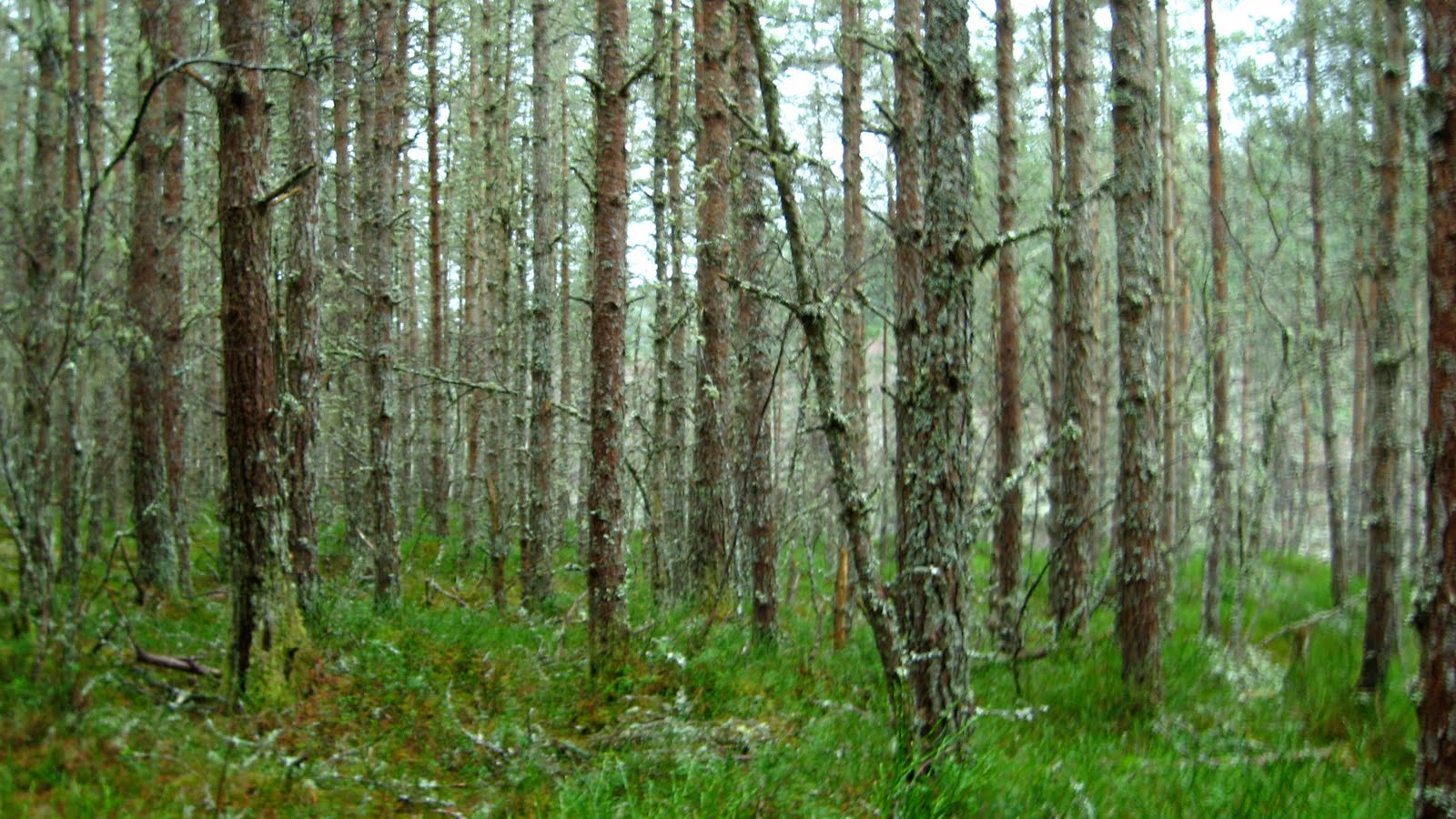
Showing posts with label bright green. Show all posts

Saturday, June 30, 2012

Will human ingenuity save the day? Technology and technologism

Technologism is the eclipse of wisdom by intelligence.

Like the difference between consumption and consumerism, the difference between technology and technologism is important. It is quite possible to consider both the "isms" to be forms of idolatry while not implying that all consumption or technology use is bad. I don't want to be consumerist, but I acknowledge and celebrate the fact that we all need to eat and wearing clothes is also generally a good idea. I don't want to be a technologist, but I acknowledge and give thanks for the fact that certain pieces of human ingenuity are capable of bringing significant, (albeit limited and often quite compromised) human goods in certain circumstances.

The "ism" in each case comes from treating the object (consumption or technology) as a transcendent or ultimate source of meaning, as a saviour, as a non-negotiable aspect of one's identity or in some other way, as a god. Consumption becomes treated as a god when we cannot imagine life without our conveniences and luxuries, when we build our major life decisions around the pursuit of higher incomes and more toys (even if this is sometimes dressed up in concerns for "financial security" or "providing every opportunity for my kids"), when we make the highest goal of politics the pursuit of rising GDP, when we identify ourselves through our purchases or find "retail therapy" to be the only way to get through the day, when metaphors and assumptions from marketing and economics saturate all areas of life. And so on. Technology becomes a god when it is seen as the highest pinnacle of human achievement, when it is treated as a non-negotiable of my identity or life goal, when it is treated as the "final solution" to all our problems, when we assume that every issue must have a technical answer, when we come to view ourselves as masters and commanders of all we survey, when it becomes a means of avoiding the messy business of relationships, justice and politics.

I don't have a problem with individuals championing certain ideas and techniques, nor with acknowledging the many and varied benefits that have come from the massive acceleration of technological changes in the last few decades. But it will not do to be a cheerleader for human ingenuity per se without acknowledging the fallen and finite grasp of the world that even our best efforts display. Every technology has brought with it costs as well as benefits, has changed our understanding of ourselves and our place in the world. Not all of these changes have been benign, and any new technology, no matter how glossy or initially attractive, is to be treated with measured caution.

If in thinking about responding to ecological crises our frame of reference excludes or minimises changes to lifestyles and cultural assumptions, demanding that there be a technological solution that enables us (in the rich, developed world) to keep on living at high and/or rising levels of consumption, then that's technologism. If we assume that there has to be a single technical response to complex social issues, rather than a broad combination of technological, infrastructural, policy, political, economic, cultural and personal changes, then that's technologism.

And if we face today's threats by holding desperately to the hope that tomorrow's genii will cook something up, placing onto future human ingenuity the expectation of salvation from the horrible mess we've made of things, that's technologism.

When technology is seen as saviour, as primary socio-political lever, as displacement of justice, as enabler of my unchallenged desires, as the primary source of identity, meaning or well-being, that's technologism.

And that's idolatry.

Friday, April 27, 2012

Confirmation bias: why I am suspicious of "good" news

The link between poverty and the dangers of our ecological predicament is an important one. Not only are those least responsible for causing the threat already (in general) suffering the early effects, they will (in general) be more vulnerable to worsening climate and ecological impacts. When we add in future generations and other species, then we have three groups who contribution is negligible or even zero but who are very likely to face the most severe effects. The temptation to motivated reasoning that justifies our present behaviours and cultural assumption needs to keep these groups firmly in mind if we are to assess our responsibilities honestly.

One important form of motivated reasoning in this context is confirmation bias, which is a well-established psychological pattern in which we evaluate new experiences and claims through our existing assumptions, preferences and convictions. We all tend to give greater weight to experiences and evidence that confirms what we already believe, rather than those things that disconfirm it, hence we all have a bias towards confirmation.

Particularly for those of us who are rich and comfortable (by global standards) or who hold a belief that we ought to be and/or can soon be, then we have a preference for things to stay as they are (more or less), or at least not to change too quickly. We don't want scientific results that imply doom and gloom to be true, particularly if they also imply our responsible for such outcomes and/or the possibility of mitigating the threat through modifying our habits and assumptions. We are likely to latch onto experiences and claims that help to confirm that preference and to pay less attention to experiences and claims that challenge it.

This is a moral temptation involving our perception of the world. If it is the case that gross injustices exist all around us, and that climate and ecological crises are very likely to contribute to exacerbating them in various ways, then we can be tempted to downplay the moral importance of this information. This might be by denying the science, by saying that we can't do anything about it, by saying that we should focus on a more narrowly defined set of moral concerns (e.g. purely national interest, or perhaps what is directly relevant for me and my family), by claiming that technology will rescue us from any bad consequences and so on. I would argue that part of Christian discipleship is learning to resist such temptations in order to keep having the horizon of our moral vision, to keep discovering that we are neighbours even to those who might not initially appear to be one of "us". The three groups I mentioned - the global poor, future generations and other species - each challenge us to expand the margins of our moral community, to discover neighbours we didn't realise we had. By focussing on what climate change and ecological degradation means and will mean for these groups, whose moral position is most devastatingly unfair, we can seek to foster a deeper and broader empathy and so nurture a richer moral imagination, capable of seeing more clearly the world through the eyes of others.

Asking "what's in it for me?" or "how am I threatened by climate change?" may, depending on one's ability and willingness to look carefully at the implications of the science, produce apathy, or fear and anxiety, or greed, opportunism and tokenism. But asking, "what are the implications for my neighbour, particularly those most vulnerable?" will lead in a very different direction, to a deep concern for others whose present and future flourishing is deeply dependent upon the choices we make yet whose ability to benefit us (at least in ways that generally enter into calculative reason of cost-benefit analyses) is severely limited.

In short, I believe that our climate and ecological crises are manifestations in the social and ecological realms of the visible and outward costs of the idolatry of consumerism and the hubris that sees humanity as exercising mastery over all things, rather than fulfilling the Genesis mandate in the pattern of Christ's rule: by being the servant of all. If this is true, then the temptation to read our predicament as something less than a spiritual crisis will be strong, since we don't like to confront evidence of our own moral failures. We want to believe that it is not as bad as all that, that the danger is still far off, that we are really helpless and bear no responsibility, that we'll find some techno-fix to ensure we don't need to look inside our hearts to see the pollution spreading within that is the root of the pollution without: the physical pollution we breathe and drink and eat and which is presently dissolving the bonds of the community of life.

Of course, it is possible that it is not as bad as all that, that the risk is less imminent than the science suggests, there we truly are impotent in the face of calamity, that a silver bullet (or silver buckshot) wonder technology (or suite of technologies and economic policies) will mean we can keep on going more or less as we are without challenging consumerism. But because we really *want* these things to be true, we ought to be especially suspicious of claims and experiences that encourage us to hold them, constantly testing whether we might be engaged in wishful thinking, motivated reasoning, confirmation bias. Instead, as Christians shaped by the knowledge that faithfulness means constant repentance (our daily bread is confession and reception of forgiveness as much as any wheat-based product), we ought to hold an epistemology that expects true knowledge of the world will frequently reveal us to be in the wrong and in need of repentance and forgiveness.

Of course, this is not an exhaustive account, and it is important to acknowledge that prior to fallenness comes divine blessing on human participation in naming and understanding a good world. I offer no council of epistemological despair or unending scepticism. The suspicion of which I speak serves a positive purpose in service of neighbour and represents a modulation of God's "yes" to the created order, not a displacement of it by a mistrustful "no".

Nonetheless, we walk in the path of one who warned that following him would mean denial of self and carrying a cross. Anything that suggests the path of faithfulness requires the defence of my material prosperity, ease and luxury needs to be double and triple checked. There is no route to resurrection that does not involve mortification.

I am therefore suspicious of pieces of "good news" that purport to minimise our responsibility or the gravity of our situation. Sometimes, they may well be true, but the good news is that following a crucified and risen Lord means being able to look at my and our failings honestly, confident in the knowledge that they are already forgiven, that I am already being empowered to walk a new path, one that is honest and life-giving.

Thursday, April 26, 2012

Always look on the bright side of life?

This is the first in a five-part series (parts two, three, four, five) that addresses a topic close to my heart: the importance of bad news and the strategic mistake of attempting to focus purely on the "bright side" of the cultural and infrastructural changes demanded by ecological crises. While frequently pointing out the kinds of steps involved in a healthy response is important, as is reflecting on the opportunities to embrace a better life afforded by our dire situation, nonetheless, unless we honestly face up to how serious and well-developed the threats we're moving into are, then any positive response is likely to remain shallow, ever tempted by tokenism and distracting gestures, and ineffectively tardy, since the worst that can happen if we delay is that we reach our bright green paradise a little more slowly.

My own PhD work on ecological fears in Christian ethics argues along similar lines. Facing the truth of our predicament requires us to experience and process certain emotions - including fear, grief, guilt and the disappointment or despair associated with dispelling certain false hopes. Unless we can locate these experiences in productive and meaningful ways (and I argue that the Christian gospel offers a compelling narrative at this point) we'll remain stuck in paralysing modes of thought: denial, distraction, desperation and despair.

Wednesday, March 14, 2012

"Fear! The crack that might flood your brain with light!"

"I want to talk to you about fear. I want to do so because, in my view, the most important issue we face is how we respond to this question. The crisis is now inevitable. The issue is how will we react? [...] We should feel a bit of fear. We are in danger, all of us. [...] Yes, things will get ugly and it will happen soon, certainly in our lifetime."
Paul Gilding has written a book called The Great Disruption. Sounds like I need to read it. He also blogs at the Cockatoo Chronicles and his latest post reflects upon his experience of speaking at TED, bringing a dark message amongst one of the bastions of bright green thinking (which he calls "techno-optimism").

Gilding's examples of humanity's ability to respond well to crises - Pearl Harbor, a life-threatening diagnosis, threat of bankruptcy - all point to what is perhaps our greatest asset at this moment, namely, our freedom to repent. Even at this late hour, it is possible to change course. This may not keep us alive, it may not preserve our way of life, indeed, it may involve further destabilisation of the status quo in the realisation that the status quo is inherently unstable and destructive. But it is our chance to wake up and grow up. Let us take it.

H/T Lou for the video. This post's title is a quote from Tom Stoppard's wonderful Rosencrantz and Guildenstern are Dead and could well be an epigram for the chapter I'm currently writing.

Wednesday, September 01, 2010

Shades of green: how do we respond to ecological degradation?

Ecological concern is a broad movement, containing much diversity. In my previous post, I mentioned Northcott's account of three approaches to ecological ethics: ecocentric, anthropocentric and theocentric. These refer to the underlying logic of different approaches to ecological ethics.

But there are other ways of categorising the field that might supplement Northcott's suggestion. One categorisation I've also found helpful is to consider the different kinds of responses that are commonly seen. Following a taxonomy coined by Alex Steffen, let us call them light green, bright green and deep green. As with the previous categories, these are tendencies rather than mutually exclusive options. And as with the three approaches mentioned previously, I believe we require elements of all three in a healthy response, since each on its own is insufficient.

Light green
Light green ecological activism assumes that the most effective response begins by winning hearts and minds. Given sufficient information and perhaps some persuasion and attractive exemplars, individuals will understand the necessity and/or benefits of making lifestyle, behavioural and consumer changes. No large political change is required, simply a gradual raising of awareness. Where the people lead, the politicians will follow.

At its best, light green responses place an emphasis on personal responsibility and the necessity of a change of heart to sustain any change of life. The light shade of this green could be read as a reference to an optimism about the human capacity for change in the light of new knowledge, viz. the freedom to repent, or it might refer to the moral superiority of choosing light over darkness.

But the lightness of this shade could also be read as lightweight, lacking in seriousness. At its more fatuous end, consumer choice is the name of the game. If it has "eco" in the label, then buying it will help the planet (ignoring the fact that it might help things more if I were not to buy anything most of the time). As long as the consumers have good information about their personal ecological footprint and products are clearly labelled, then we can rely on the sensible lifestyle choices of individuals to transform the landscape. Light green actions may be susceptible to manipulation through corporate greenwash.

And so even earnest and well-intentioned light green activism may obscure the structural reasons why society develops the way it has, the deep and powerful economic and ideological vested interests in the status quo. It generally fails to question consumerism, merely replacing one kind of consumption for another, albeit one with a lighter footprint.

Bright green
Bright green was Alex Steffen's preferred mode. The focus here is on intelligent transformation of society through better design, technological development and more widely distributed social innovations. This approach assumes that it is possible to have your cake and eat it, that increasing human prosperity is highly compatible with ecological responsibility, that going green is not merely the lesser of two evils, but a chance to embrace a better life for all. The brightness of this green is intended to refer both to the focus on intelligent response and to the optimism concerning human ingenuity and flexibility espoused by many in this camp.

Much of the talk of "green jobs", "low-carbon economy" or "sustainable development" goes here, though these terms can and are, of course, used in government and corporate greenwash for policies pursued for other reasons. Politically, bright green activism advocates radical social and economic change. Bright greens are frequently passionate about redesigning cities (often with reference to new urbanism), transforming the economy to renewables and/or nuclear power, smart grids, electric cars (with vehicle-to-grid capabilities), techno-progressivism, closed loop materials cycles, bio and/or geo-engineering and, in general, the capacity of co-ordinated thoughtful human action to improve a situation.

At its best, bright green activism seeks constructive solutions rather than mere protest. Undoubtedly, it is possible to build a better mouse trap - to design systems, cities and even whole societies that waste less, produce more and more closely align with human and ecological well-being. Systems are indeed important; personal change is insufficient to avoid an ongoing and worsening ecological catastrophe.

Yet bright green thought can be blinded by the brilliance of its vision to two realities: human sinfulness and finitude. It is utopian, and like all utopian dreams, it can easily become a nightmare. We all have a tendency to go with the devil we know, to continue self-destructive habits, to put selfish interests before the interests of others. We are slaves to sin and without spiritual liberation, even the powers of intelligence and optimism are frustrated.

But there is perhaps an even deeper problem for bright green thought than sin, namely, the finitude of the earth and its living systems. That is, at its most euphoric, bright green thought forgets that finitude is a gift and control an illusion. Furthermore, not all human-caused damage is humanly reversible.

Deep green
This green is deep because it attempts to delve beneath the surface of which political party happens to be in power or which new technology is being developed, instead seeking after the underlying philosophical, economic and political causes of ecological degradation. The analysis of the problem is taken deeper than left vs right or the relative merits of nuclear or wind power. The problem lies not in lack of information or political co-ordination, but in industrialism, capitalism, or some foundational component of contemporary society. Like bright greens, deep greens seek radical political and social transformation, including (depending how deep they go) a rejection of consumerism, of contemporary hyper-capitalism, of the logic of the market in all its forms, of industrialism and even, in some cases, of agriculture.

Sometimes it is also called dark green, since it is frequently associated with pessimism about the possibility of sufficient change without massive disruption to human populations. Some dark greens seem to think that a major human die off is inevitable, desirable or both. Yet not all deep green thought is Malthusian, as it seems reasonable to include certain forms of steady state economics under this banner. Perhaps dark green deserves its own category.

Yet deep green is a better label for all approaches that view endless economic growth as ultimately inherently self-limiting. It echoes the term deep ecology, a philosophy that tries to avoid anthropocentrism in our understanding and appreciation of the complex community of life. Human flourishing is both entirely dependent upon and ultimately less important than the flourishing of ecosystems.

At its worst, deep green can be irresponsible or merely heartless in its embrace of the necessary misery associated with economic decline or collapse. It can be self-indulgent in a wholesale rejection of any partial solution or temporary improvement. It can be self-righteous in condemnation, futile in protest, acquiescent in despairing resignation, paralysed by apocalyptic nightmares.

Yet at its best, a deep green perspective refuses to grasp illegitimate hopes. Our all-too-human hopes must die. We need to feel how deep the roots of our predicament are: both within our own hearts (as light green affirms) and woven into the structures of society (as deep green reveals). While the life of Christian discipleship may have room for what Barth calls little hopes, these are only possible once we have crucified any other great hope outside Christ.

Brown
And of course, some people remain brown, perhaps sporting merely a fig leaf of greenwash to cover their advocacy of ongoing exploitation of the creation without serious limits. There are also various shades of brown, but they all smell bad.
First image by Brennan Jacoby.
Thursday, June 03, 2010

Joyfully embracing less (and more!)

Doing without. Making do. Cutting consumption. Dropping luxuries.

Often an ecologically responsible lifestyle is put forward as a necessary asceticism to avoid the worst of the outcomes for our former (and ongoing) profligacy: "If you fly, we all die." This method relies on guilt and fear to motivate change, which may have some initial success, but are generally quite terrible at securing long term transformation.

But it need not be so. While a certain measure of fear can be a healthy part of facing the truth of our situation, true conversion is not simply away from, but towards: away from the false idols of wealth, security, consumption, endless growth and towards the living and true way that is Christ. We don't just shun death; we embrace life. And while some degree of fasting from luxuries is a healthy spiritual discipline to focus the mind on the pleasures of God, Christian discipleship is also about feasting, celebration and joy. Lent gives way to Easter.

Another way of putting this, is that consumerism is a false idol, promising far more than it can deliver, and ultimately diminishing our capacity for real enjoyment of what it offered in the first place. Renouncing this idol is not primarily about ecological mitigation, but first it is a simple matter of spiritual health, of being truly alive, deeply human. By the way, this is one of the reasons why I am suspicious of "bright green" technological optimism, which promises us that if we just build enough nuclear plants/wind farms (delete according to taste), then we can go on as gluttonously as before. Our need to change goes far beyond our carbon footprint, or even our entire ecological footprint.

And so it is not only possible and necessary, but good in all kinds of senses (not just ecologically, but psychologically, relationally, socially, spiritually) to shun consumerism, where "I am what I buy", and embrace the living and true God, who gives us every good thing to enjoy. This may mean embracing a life of "less", but in more important ways it is also walking towards a life of more, much more.

Less purchasing unnecessary products out of boredom, jealousy, indifference, laziness or habit; more attention to the wonderful blessings one already has. Less "stuff" and clutter; more reclaiming of lost skills of resourcefulness, sharing, creativity and building to last.

Less climbing the career ladder to keep up with the Joneses, to afford the latest toy or to impress the parents/peers/pets; more satisfaction in thoughtful service of the common good. Fewer debts; more freedom. Fewer hours; more time.

Less solitary living; more discovering the joys and sorrows of community. Fewer mansions and holiday homes and investment properties; more being at home in oneself and in God.

Less meat and animal products; more creativity and health in cooking. Less year round supply of whatever foodstuff takes my fancy today, more appreciation of the seasons and local produce. Less fast food; more hospitality. Less unceasing gorging; more cycles of mindful fasting and celebratory feasting.

Less advertising; more contentment. Fewer toys; more fun. Fewer shoes; more walks. Fewer wardrobe changes; more changes of heart. Fewer boxes; more room in life for the unexpected. Less retail therapy; more healing of desire.

Less unnecessary driving; more perambulation, pedalling and public transport for exercise, socialising and increasing intimacy with the local area. Less international travel; more depth of appreciation for local delights. Less business travel, more saving time and money through video conferencing. Less suburban sprawl; more new urbanism.

Less reliance on a finite supply of cheap energy to meet my every whim; more consideration of what is worth doing. Less watching; more observation.

Less wealth; more riches. Fewer heavy burdens of fear, guilt, desperation; more hope, forgiveness, peace. Less treasure that fades; more treasure that lasts.