Implications, or why matter matters
 Going to heaven when you die is not the biblical Christian hope. Instead, in the light of Jesus' resurrection, Christians are to hope for the transforming presence of God that brings new life to the dead and an end to all that is wrong and warped in creation.
Having recently summarised the main points of this series, I wanted to suggest a few reasons why it is important. What difference does this make? To get us started, I'd like to suggest seven. I'd love to hear more.
1. Creation and redemption are not fundamentally opposed
The same God who made the world has acted in Christ and the Spirit to save it. The world was made through Christ and was redeemed through that same Christ (Colossians 1.15-20). We must reject any gnostic or Marcionite division between Creator and Redeemer. The church is not the opposite of the world; it is the imperfect foretaste of the world's true destiny.
2. God has not abandoned his good creation
If we await our redemption from the world, rather than the redemption of the world, then it would appear that God, having called his creation 'good, very good', has given up and is ready to consign it to the garbage. God's power and faithfulness are called into question by any escapist eschatology. However, the God with the power to call things which are not into existence is the same God who raises the dead (Rom 4.17).
3. God says 'yes' to life
His 'no' of judgement is only to be understood within an overarching 'yes' to Christ, to humanity, to his world, to life. God is unashamedly positive about all that is good in the world: 'yes' to love, to laughter, to sharing, to sex, to food, to fun, to music, to matter. It is because he loves the world that he will not put up with its present disfigurements.
4. What we do with our bodies and the planet matters
Not because we can create the kingdom of God or sculpt our resurrection bodies now, but because God cares for them. Bodies and the broader environment in which they find their place are good gifts, worth caring for. Just as our obedience will never be complete in this age, yet we keep thanking, trusting and loving God, so our care for creation is presently an imperfectible, yet unavoidable, responsibility and privilege. We must therefore also reject any dualism that opposes 'spiritual' with 'physical'. To be truly spiritual is to be enlivened, empowered, cleansed and directed by the Holy Spirit of life, who is the midwife our birth (Job 33.4) and our rebirth (Tit 3.5), and the midwife of the world's birth (Gen 1.2) and rebirth (Rom 8.22-23).
5. Humanity as humanity matters
When the Word took flesh, he came as one of us. He remains one of us. We are not saved from our humanity, but are made more fully human. We await resurrection as humans. Nothing that is truly human is to finally perish (though all must be transformed). This makes human endeavour and relationships noble, even while they remain tragically flawed. Christians remain humans first, giving us much still in common with our neighbours. 'Secular' work in God's good world is not to be despised or treated merely instrumentally. Neither is art, or education, or healthcare, or agriculture, or science, or industry, or government. There is much about these activities that will not endure, and much that requires reform; yet these tasks all participate as part of what it is to be a human creature.
6. Difference is not necessarily sin
The Neoplatonic vision of creation and redemption is one in which an original unity degenerates into plurality before returning back to the source, the One. Not only does the doctrine of the Trinity undermine such a way of thinking about the world, but the fact that we await the resurrection of ourselves and our world in all its/our wonderful diversity and beauty also involves the rejection of this common assumption. We do not need to all be the same.
7. Our knowledge of God is not otherworldly
However hidden, confused, partial and dim it might presently be, one day creation 'will be full of the knowledge of the LORD as the waters cover the sea.' (Isa 11.9; cf. Hab 2.14). The fullness of God's deity dwells bodily in Christ (Col 2.9). The home of God is to be with humans (Rev 21.3). Having a body, using language, being situated in a specific cultural context, being gendered: none of these are barriers to the knowledge of God. While each has been problematised by sin in various ways, we must not confuse finitude with fallenness. To seek knowledge of God, one does not need to transcend creaturehood.
Aside: Maybe the prohibition against visual images under the old covenant was not because the God of Israel was simply an idea, or simply invisible, but to prevent the pre-emptive summons of his presence through a human re-presentation. God is not at our beck and call, but sovereignly presents himself in his own good time through his Word and Spirit - which blows where it will.
So much more could be said about each of these points, and perhaps there are some more series to come here. But for now, I will draw this series to a close. To be a friend of God is to be a friend of creation, of humanity, of life - the kind of friend that hates what is evil, clings to what is good, that is not overcome by evil, but overcomes evil with good (Rom 12.9, 21).
Series: I; II; IIa; III; IV; V; VI; VII; VIII; IX; X; XI; XII; XIII; XIV; XV; XVI.
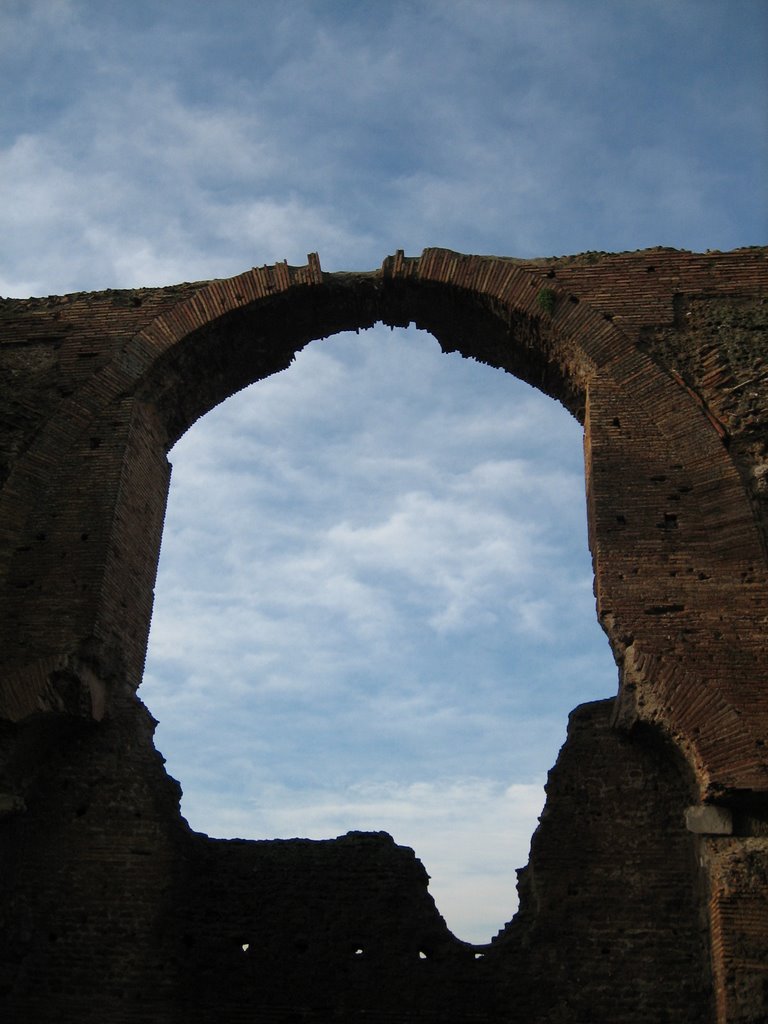
Ten points for the first to link back to the post that pictured the same structure as above.




 Posts
Posts