Showing posts with label war. Show all posts

Tuesday, November 15, 2016

On consistently labelling terrorism

Terrorism: the threat or use of violence intended to provoke fear and targeting civilians for political, religious or ideological reasons.

This has been the definition of terrorism I've been working with for a few years. It is very similar to official legislative definitions in a number of jurisdictions. Yet it seems to rarely be applied consistently. Typically, it is only used for non-state agents, and mainly used when the perpetrator is not from a dominant social group. But if my definition above is what we actually mean by terrorism then there is far more terrorism that happens around the world than is usually recognised.

When an ISIS-sympathiser carries out a mass casualty attack in a major Western city, that is terrorism (though not if they attack a military target, btw - that is just part of irregular warfare).

When a white nationalist assassinates an elected MP while shouting xenophobic slogans, that is terrorism (amazing how so much of the media has avoided using the term in reporting on the trial of Jo Cox's assassin).

When an authoritarian regime drops barrel bombs in civilian areas or conducts strikes against hospitals, that is terrorism.

When a "liberal democracy" uses double tap drone strikes targeting first responders, or designates all males of fighting age in an area as energy combatants until proven otherwise, that is terrorism.

When white supremacists torch black churches or paint threats on mosques, or graffiti swastikas on synagogues, that is terrorism.

When an apartheid state illegally occupies or blockades a territory and severely limits the residents' access to water, food and basic supplies, that is terrorism.

When law enforcement targets certain kinds of protesters for unnecessarily brutal treatment, or exhibit a pattern of using deadly force against certain kinds of unarmed suspects, that is terrorism.

When government-backed hit squads assassinate activists who are highlighting state injustices, that is terrorism.

When an angry man yanks off a woman's hijab, or promises violence against an LGBTI person, or tweets a rape threat to a female journalist, that is terrorism.

When colonial invaders dispossess indigenous peoples, forcibly remove their children and erase or suppress their culture, that is terrorism.

When a government harvests organs involuntarily from political prisoners of conscience, that is terrorism.

When a political candidate threatens violent reprisals against his opponents, that is terrorism.

If we are going to use the term at all, then let us at least be consistent.

Thursday, September 27, 2012

There are no merely local famines

In a globalised society, there are no merely local famines, or revolutions, or failed states.

Many of our most severe ecological threats converge on the stability of the global food supply. The most explosive consequences of food shortages are not population decline from starvation, but civil unrest and conflict (as well as increasing vulnerability to disease/pandemic). During the 2008 food price spikes, there were riots in sixteen countries. And the most visible political consequence of the 2010 food price spike was the Arab Spring (though again there were protests and riots in many other countries). Yes, of course there are other underlying factors in every country affected, but the spike in the price of bread was the initial spark in nearly every country that saw significant instances of civil unrest in the Middle East and North Africa (MENA). The protests that ultimately brought down governments in Tunisia, Libya, Egypt (and possibly Syria) all had the price of bread as their trigger (as did those in Bahrain and elsewhere). And why were prices so high in 2010? Again, all kinds of systematic reasons (biofuels taking an increasing share, changing diets, speculation, government hoarding in response to an initial rise), but the short term trigger was almost simultaneous crop losses from extreme weather events in Argentina, Australia, Pakistan and Russia (which famously stopped exporting wheat after its six sigma heatwave). Food price spikes are inconvenient in the west, where we spend less than 15% of our income on food, but disastrous in the many places with otherwise somewhat stable governments where large parts of the population spend more like 75%+ of their income on food.

The consequences of political unrest are not confined to the poor country. To pick one consequence: our taxes here in the UK recently went towards funding war in Libya, despite an austerity programme of slashing government services in response to the worst recession since the Great Depression. Refugee flows from all the various places involved have also increased. Major protests in the US and elsewhere this time last year questioned the direction of the present economic order. These explicitly drew both inspiration and organisational links from elements of the Arab Spring before being brutally suppressed - perhaps not as brutally as in Syria, but if you had your eyes open last autumn there was plenty of state-sponsored violence happening against protesters in free(r) countries, much of which was never acknowledged or addressed by the justice system.

This is not at all to claim that climate change "caused" the Occupy movement in any straightforward way, simply to chase one strand of causal links as an illustration of the global implications of crises in a single region.

Failed states have all kinds of knock-on effects on their neighbours and the rest of the world. Think about the extra costs to global shipping due to Somalian piracy (leading to many shipping companies eagerly awaiting the further opening up of Arctic shipping lanes to avoid the area entirely), about the seedbed of terrorism that Afghanistan has represented since the US turbo-charged the factions against Soviet invasion, about the effect on global oil prices (and hence the global economy) of war in Libya (or Iran...), about the ongoing repercussions of the Arab/Israeli conflict partially driven by the planned failure/sabotage of the Palestinian state. And so on. The global system can handle a few failed states, but since it does so by distributing the costs across the whole system (UK taxpayers paying for wars in Libya), it does so by increasing the stress on the system as a whole. Electricity grids are a good analogy here, actually - grids can handle the sudden failure of a certain number of elements in the grid, but do so at the cost of placing the entire grid at greater risk of collapse. Globalisation is a super-grid for economic and political stability: failure in one part can be accommodated by increasing stress across the board. But only to a point.

This is why Joseph Tainter says in the final chapter of his intriguing and seminal book, The Collapse of Complex Societies that there can be no local collapses in a global system. The term "catabolic collapse" is sometimes used, which refers to a collapse in one part of a system becomes self-reinforcing and ends up taking down the whole show (see here for a much more detailed and insightful discussion of this concept by John Michael Greer).

So when you read about the coming food price spike of late 2012 as the effects of the US drought kick in, don't just think about poor Indians struggling to put food on the table, but also think about the $700b-odd the US spends on its military (over $1t on "national security" as a whole), about the possible break-up of the EU (troubles in Greece are complex, but one of the causes/manifestations/worsening of their crisis is the fact that they receive per capita more refugees and undocumented immigrants fleeing struggling MENA countries than almost anywhere else in the EU and it has seen a big jump in recent years), about deforestation in Indonesia and elsewhere (which is linked, in complex ways, to food prices), and so on.

Global crises require global (as well as local, provincial, national, regional) responses. We can't simply pull up the drawbridge and hope to weather the storm.

Monday, August 20, 2012

Winning battles, losing the war

"Today, we have more environmental groups and less forests, more 'protected areas' and less species, more carbon taxes and greater carbon emissions, more 'green' products and less green space."

- Rex Weyler, Nature: A system of systems.

Fewer forests, fewer species. "Less" qualifies mass nouns; "fewer", count nouns. Less sloppiness; fewer errors. Less pedantry; fewer readers. Sometimes, no matter how many times I correct grammatical confusions, I think I'm waging an unwinnable war. But I pick myself up and fight on. What else can one do?

Wednesday, April 25, 2012

Lest we forget

Far-called, our navies melt away;
On dune and headland sinks the fire:
Lo, all our pomp of yesterday
Is one with Nineveh and Tyre!
Judge of the Nations, spare us yet,
Lest we forget - lest we forget!

- Rudyard Kipling, Recessional, 1897.

Lest we forget the ephemerality of empire and the dangerous temptation to national self-aggrandisement. Lest we forget the divine judgement upon human folly and pomp.

And lest we forget the hope of mercy, despite our manifold failures. Spare us yet.

Friday, March 23, 2012

Good news, bad news

SMH: The good news is that the US National Intelligence Council thinks "a water-related, state-on-state conflict is unlikely during the next 10 years". The bad news is that after ten years, all bets are off: "as water shortages become more acute beyond the next 10 years, water in shared basi[n?]s will increasingly be used as leverage [...] The use of water as a weapon or to further terrorist objectives also will become more likely beyond 10 years". Full report here.

CP: March Madness. The recent North American heatwave is breaking a record-breaking number of records. Between the 9th and 19th of March more than 4,000 US heat records were broken, and only something like 113 cold records, a ratio of about 35 to 1 (the average ratio since 2000 in the US is 2.04:1). Some places set March records higher than April records, some had daily low temperatures that broke previous daily highs, and some had old records broken by as much as 17ÂșC.

HuffPo: 21stC oil will break the bank and the planet.

Asian Development Bank Says Climate Migration Poses Growing Threat: "In a new report, the bank says more than 42 million people in the region were displaced by environmental disasters over the past two years alone. In 2010, it said, more than 30 million people were displaced, some permanently, primarily by devastating floods in Pakistan and China."

NYT: OECD warns of ever-higher greenhouse gases. This is what we're headed towards without a significant change of direction.

CP: Do trees have rights? Revisiting The Lorax.. In a certain sense, they already do, at least under US law.

SEI: Valuing the oceans: "climate change alone could reduce the economic value of key ocean services by up to 2 trillion USD a year by 2100". I'm more than a little sceptical about such attempts to place an economic value on ecological realities, since they obscure the fact that the economy is a wholly-owned subsidiary of the environment. The damage we are doing to the oceans is not simply to be measured in missing dollars, but in broken lives, lost species, a weeping Creator.

Wit's End: Tropospheric ozone - blighted trees, breathing difficulties and pernicious corruption of science. The atmospheric pollution you probably haven't heard much about. This is not the "ozone layer" (stratospheric ozone), in which ozone molecules are precious and save our bacon from frying, but surface level ozone, which is an altogether different and nastier beast: "health costs due to global ozone pollution above pre-industrial levels by 2050 will be US$580 billion (year 2000$) and that mortalities from acute exposure will exceed 2 million."

Friday, June 03, 2011

I am, you are, we are Australian

Guest post by Michael Paget

A civil religion?
April was a busy month for religious occasions. Easter, of course: the high (and low) point of the Christian faith. ANZAC day, the zenith of cultic nationalism. And a royal wedding (the nadir of republican fervour).

And it led me to wonder: in a post-Christian world where, nonetheless, many of the most socially significant events take place (or are at least echoed) in churches, what is the relationship between Christians and the country in which they live?

I admit to being particularly provoked by the repeated parallel drawn by preachers between the death of diggers and the sacrifice of Jesus. Now, let’s be clear: I’m not a pacifist. (Though if I were, ought my argument to be heard differently?) My grandfather and father were senior officers in the Australian military; they both saw combat. I have a photo of them in Vietnam during the war, the only Western father/son photo in that theatre of which I’m aware.

But the death of diggers and the sacrifice of Christ are alike in only the most superficial manner. Soldiers die as a tragic and occasional side effect of the (sometimes) courageous use of violence to achieve ends. Every death is a failure. Avoiding the loss of soldiers is a growing priority for military leaders and technologists. The more removed humans can be from the field of combat, the better. The use of so-called 'smart' and laser-guided bombs from a flying fortress high out of harms way is an example.

But Jesus died as a direct result of his courageous refusal to employ violence. And the death of Christ was no side-effect – it was a necessary and planned step in his defeat of death itself.

When we Australians tell the stories of our past, then, we need to tell the truth. The freedom of our country is not built on the sacrifice of the many soldiers who died. Military success is not measured by the lives lost, but the lives preserved. The independence of this nation was sustained because Australia and its allies used violence more effectively than our enemies, killing sufficient strategically important humans on the other side and damaging or threatening damage to enough of their infrastructure to bring things to a close.

But we Christians have received a different story about ourselves as Christians: our freedom was won by one who had all the power in the world at his disposal, but refused to employ it to destroy.

All this suggests to me that the stories we tell about ourselves as Australians and the stories we tell about ourselves as Christians seem to be in fairly sharp conflict.

Which brings us to the wedding. And what a wedding! The pomp and ceremony made it impossible to forget, whatever the tabloids and magazines may have said, that this was not just a celebration of a couple in love. It was also a pageant for Great Britain’s imperial past and economic present, and a clarion call to reawaken the monarchy as the centre of British identity.

Oh, and it was in a church. An Anglican church, at that. So was it a state event, or a church event? And does it matter?

I think it does. The church acts on behalf of God – not the state – and receives his institutions. That the Christian – and Anglican – ceremony of marriage is recognized by the state as normative for the provision of certain civil benefits is a serendipitous (providential?) product of the historical coincidence that is Western history. All the chaff around the wedding of William and Catherine, then, is just that – an attempt by the monarchy and the state to lay claim to what happened in the church, but nothing more.

When the church is asked to celebrate and witness a marriage, it can and should do so in the story that Christians receive about marriage, not the story our world tells about marriage. These, again, are very different stories.

Why are our stories – of identity, of marriage, of meaning – so different? Because, ultimately, this is not our country. Our hopes and dreams are not found in our national success – on the battlefield or the sporting field, in romance or in business. We do not look to political or corporate leaders to save us or guarantee our happiness. We do not look to ANZAC for who we are, or royal weddings for who we long to be. We look to the cross - to Easter. As Paul says:
Our citizenship is in heaven. And we eagerly await a Saviour from there, the Lord Jesus Christ.

- Philippians 3:20.

We await a saviour from somewhere else. That is who we are. That is the story we have to tell. About us. About our world. We await a Saviour, Jesus Christ, from somewhere else.

Thursday, April 21, 2011

The future according to Google, and other stories

xkcd: The future according to Google.

Mother Jones: How we fool ourselves. "Expecting people to be convinced by the facts flies in the face of, you know, the facts. [...] We push threatening information away; we pull friendly information close. We apply fight-or-flight reflexes not only to predators, but to data itself. [...] When we think we're reasoning, we may instead be rationalizing." H/T Rod Benson.

UK voters: The lies of the No to AV leaflet. I'm getting pretty annoyed by how misleading so much of the No campaign has been. The BNP are being used as a scare tactic, and yet they are only party to officially endorse the No campaign. It bugs me that such misrepresentations are being effective. H/T Neil Stewart.

SMH: Memos show oil motive in Iraq war. Perhaps this comes as no surprise, but the confirmation is important.

SMH: How Obama is morphing into Bush. Change we can believe in, because it is so small and non-threatening.

SMH: What is the secret to long life? Good table manners.

Reddit: If all you lazy, whining two-thirds world readers think you have things tough, you need to get a sense of some real first world problems.

Oatmeal: The deep ocean is a weird, weird place. Despite being a cartoon (with some naughty language), this is apparently true.

The Cost of Energy: Unemployed? You might want to consider applying for this position.

And a quick straw poll. I occasionally put together lists of random links like this. Which would you prefer:
(a) for these to continue in this fashion, with occasional dumps of lists like this;
(b) for me to post single links as I come across them; or
(c) for me to stop all random links and focus on a narrower band of topics?

Sunday, February 13, 2011

How to survive the post apocalypse: 1981-style

This video, recently re-discovered in an old university film archive, contains a wide variety of useful advice for life after a nuclear apocalypse. Required viewing for everyone who has ever contemplated ducking under a desk when the nuclear siren sounds.

Ducked and Covered: A Survival Guide to the Post Apocalypse from Nathaniel Lindsay on Vimeo.

Those confused about the title ought to refer to the equally informative original.
H/T Jason.

Friday, December 10, 2010

What has WikiLeaks ever done for us?

This is a partial list covering some of the abuses of corporate and government power revealed by WikiLeaks over the last few years. Is any of this information in the public interest? Does this record indicate an exclusively anti-USA organisation? Are these revelations the work of terrorists? Would anyone prefer for the world not to have known all these abuses? During its four year history, WikiLeaks has exposed the following:

• 217 cases of UN peace-keepers being accused of sexually abusing and impregnating girls in eastern Congo.

• Trafigura, an African oil company, caused widespread illness through a toxic gas dump, and then tried to suppress this being published in the Guardian through a secret "super-injunction", in which the press cannot even report the existence of an injunction.

• US forces killed hundreds of innocent civilians at checkpoints in Iraq.

• The "secret bibles" of Scientology, normally only available to initiates for very large sums of money.

• The designation of some prisoners at Guantanamo Bay detention camp as off-limits to the International Committee of the Red Cross, which the US military had previously denied.

• Details of the corrupt rule of the Arap-Moi leadership in Kenya, who were involved in US$3 billion dollars of fraud. They were subsequently defeated at the next election.

• Sarah Palin used a private Yahoo email account to send work-related messages, in violation of public record laws.

• Corruption amongst politicians in Peru over oil contracts, which resulted in the prime minister's resignation.

• More than 15,000 civilian deaths in Iraq that had previously been concealed by the U.S. government.

• A video showing a U.S. army helicopter slaughtering Reuters journalists and Iraqi children in cold blood.

• Al-Qaeda's deadly exploitation of children in Iraq.

• Irregular activity at Kaupthing Bank in Iceland, with large sums of money being loaned to bank owners and other debts were written off, precipitating the Icelandic financial crisis, the collapse of all three Icelandic banks, the breakdown of a coalition government and the indictment of a former prime minister.

• US Department of Defense Counterintelligence Analysis Report from March 2008 detailing how to marginalise WikiLeaks.

• US soldiers used Iraqi civilians as human bomb detectors.

• Illegal government wiretapping in Canada.

• The CIA kidnapped an innocent German and tortured him for months, then attempting to stop Germany from arresting its operatives.

• The US State Department instructed its diplomats to break international treaties by gathering biometric and other personal data on senior UN figures.

• The US has pressured the UK government to break a treaty on cluster bombs by turning a blind eye to bombs stored at US bases on UK territory.

• Australian government web filtering to prevent access to child pornography and terrorist sites extended to a range of other legal sites, including Wikipedia entries, Christian sites, a tour operator and WikiLeaks itself.

• DynCorp, a US company, hired young boys to dance for Afghan police in a social context usually linked to pederasty.

• Shell's corruption and influence in the government of Nigeria.

• The US wrote Spain's proposed new copyright laws.

• US suppression of Spanish court cases involving US figures accused of torture and extradition.

• Pfizer used dirty tricks to avoid clinical trial payout.
List partially modified and expanded from here. More information on Wikipedia.

Thursday, March 13, 2008

Food fight

I hate it when blogs become a list of links to favourite videos, but I'm going to indulge myself one more time. Watch this. Stay with it until it starts to make sense, then watch it all again and enjoy the "aha!" moments.

Or if you're still really confused, try the character cheat sheet, or the scene breakdown.
WARNING: Comments contain spoilers.

Wednesday, April 25, 2007

The psychology of loss

Which would you choose?

(a) You will surely suffer a loss of $890 OR
(b) You have a 90% chance of suffering a loss of $1,000 and a 10% chance of suffering no loss.
Ross Gittins has written a fascinating article in the SMH reporting on some psychological research suggesting reasons why the advice of hawks is given more weight than that of doves.

Monday, January 15, 2007

Merton on peacemaking

      Will you end wars by asking men to trust men who evidently cannot be trusted? No. Teach them to love and trust God; then they will be able to love the men they cannot trust, and will dare to make peace with them, not trusting in them but in God.
      For only love - which means humility - can cast out the fear which is the root of all war.

      If men really wanted peace they would ask God and He would give it to them. But why should He give the world a peace which it does not really desire? For the peace the world seems to desire is really no peace at all.
      To some men peace means merely the liberty to exploit other people without fear of retaliation or interference. To others peace means the freedom to rob one another without interruption. To still others it means the leisure to devour the goods of the earth without being compelled to interrupt their pleasures to feed those whom their greed is starving. And to practically everybody peace simply means the absence of any physical violence that might cast a shadow over lives devoted to the satisfaction of their animal appetites for comfort and pleasure.
      Many men like these have asked God for what they thought was "peace" and wondered why their prayer was not answered. They could not understand that it actually was answered. God left them with what they desired, for their idea of peace was only another form of war.
      So instead of loving what you think is peace, love other men and love God above all. And instead of hating the people you think are warmakers, hate the appetites and the disorder in your own soul, which are the causes of war.

- Thomas Merton, Seeds of Contemplation (London: 1949), 72-73.

Friday, November 24, 2006

Hauerwas on just war and pacificism

While we think just warrior are wrong, they might not be - another way of saying that we think the just war position as articulated by an Augustine or a Paul Ramsey is a significant challenge to our own Christian pacificism and is theological to its core. Just warriors and pacificists within the Christian church must be committed to continued engagements that teach them not only to recognize their differences but also their similarities, similarities that make them far more like one another than the standard realists' accounts of war that rule our contemporary culture and that have taken a firm hold in the church.

- Stanley Hauerwas, 'Courage Exemplified' in The Hauerwas Reader, 303.

I thought Stanley might offer an apt reminder in these conflicts over how Christians can conflict. Keep it up everyone.

Thursday, November 23, 2006

Must Christians be pacifists? III

A series by Andrew Errington
III: The cross and the wrath of God
I have been arguing that governing authorities who “bear the sword” are a God-given provision for this age, servants of God who provisionally and imperfectly reflect his final judgment on the last day. This does not weaken Jesus’ ethic of non-resistance and nonviolence for the Christian community. “Judge not,” says our Lord; and we dare not disregard his warning. Yet it does mean that “within the New Testament the sphere of public judgment [that is, the determinations of right and wrong made and enforced by political authority] constitutes a carefully circumscribed and specially privileged exception to a general prohibition of judgment” (Oliver O’Donovan, The Ways of Judgment, 99). Within this carefully circumscribed sphere the use of “violence” (in some sense) to forcefully enact judgments cannot be ruled out as categorically wrong.

A clear view of the wrath of God is central to this argument. Without it, Christian ethics are unintelligible. The wrath of God means Christians must not resist the evildoer, but instead love their enemies and overcome evil with good; and it means governing authorities must resist the evildoer, bearing the sword with justice.

This position remains deeply Christocentric. It is because Jesus himself will one day return to judge the living and the dead that we may contemplate the ways of judgment here and now. Yet it is perhaps a less cross-centred ethics than that advocated by Kim Fabricius (see Part I). Previously, Kim has described Jesus as “the hermeneutical criterion of all scripture” (Propositions on peace and war: a postscript Yet his arguments seem to go further and see the cross as the hermeneutical criterion for all that Jesus is, and so all that God is. A similar idea was hinted at by Ben Myers when, in his wonderful Theology for beginners series, he described Jesus’ resurrection in this way: “God took this dead man through death into new life, into the life of God’s future. Precisely as a dead man, he lived! Precisely as the Crucified One, he became the Risen One!” (Theology for beginners (7): Resurrection, my italics). What does this mean? Does it imply that the death of Jesus is the definitive moment in God such that anything that cannot be said of God at this moment cannot rightly be said at all?

The not-quite-pacifist position diverges at this point because of the conviction that the death of Jesus is not the final thing to say about God. The one who was crucified is now exalted as Lord and will return. To be sure, he still bears the marks of the nails in his hands, but these now show not only his surrender to death but his defeat of it. Now Jesus reigns, and he must do so “until he has put all his enemies under his feet” (1 Cor. 15:24). If what we have to say about God is at odds with this Jesus, then, too, we may end up with a “decaf theology” (see Propositions on peace and war: a postscript). "As the cross is not the sum of how Jesus 'went about doing good,' so neither is the command 'follow me' exhaustively accounted for by the words: 'when you are old you will stretch out your hands, and another will gird you and carry you where you do not wish to go.'" (O’Donovan, The Just War Revisited, 11).
I’d like to thank Kim for this opportunity to enter into conversation with one whose knowledge and imagination far exceeds my own. I hope some of my thoughts have been half as interesting as his have been for me. Series: I; II; III.

Tuesday, November 21, 2006

Must Christians be pacifists? II

A series by Andrew Errington
II: Violence and the judgment of God
The argument for Christian pacifism finds its basis in the nonviolence of God: “unless the opponents of pacifism can demonstrate a violent streak in Jesus himself… their case is like espresso without caffeine – it lacks the essential ingredient.” (Propositions on peace and war: a postscript)

But is there violence in Jesus? The suggestion seems repellent; yet we must remember that there are New Testament texts which seem to say exactly that. The Lord Jesus will be “revealed from heaven with his mighty angels in flaming fire, inflicting vengeance upon those who do not obey the gospel…” (2 Thess 1:7-8). And the idea of the wrath of God is central to New Testament discussion of God’s future, providing the rationale for Christian non-resistance: “Beloved, never avenge yourselves, but leave room for the wrath of God; for it is written, ‘Vengeance is mine, I will repay, says the Lord.’” (Rom 12:19).

But does this entail violence? The imagery in 2 Thessalonians is certainly powerful. Yet there are reasons to hesitate. As many have pointed out, when we look at the images of God’s judgment in the Apocalypse they are often ironic and self-defeating. The Lion of Judah goes Baa! The army of conquest is led by the Prince of martyrs! The rider on the white horse strikes with a sword, but it is a sword that comes (as a word) from his mouth! Will God’s vengeance be violent? Perhaps we are best to remain agnostic at this point. It is perilous to speak too concretely about realities that are more than a little beyond us.

Does this mean that a firm argument against pacifism is impossible? Not necessarily. Contrary to Kim’s assertion, those who argue against absolute pacifism do not need to demonstrate that there is violence in God, but only that the identity of God in the final judgment is not incompatible with some forms of human violence in the present. The not-quite-pacifist believes that the execution of judgments by force in this present age is a necessary reflection of God’s final judgment, albeit a reflection as in a glass darkly. The return of Christ may not involve violence per se; but it will involve the wrath of God; and this is the basis for the fearful task of provisionally and imperfectly executing judgments by force. This is the lot of the governing authority, who “does not bear the sword in vain,” but is “the minister of God to execute his [i.e. God’s] wrath on the wrongdoer” (Rom 13:4). The ruler who thinks she can execute God’s wrath in this age without some kind of forceful punishment has, perhaps, too lofty a view of her capabilities.
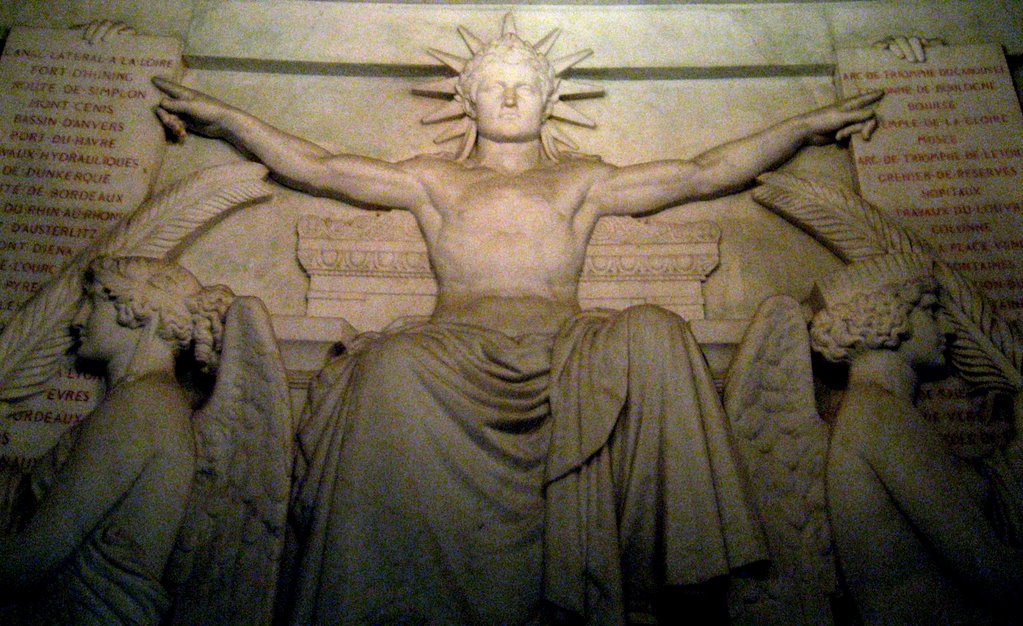
Series: I; II; III. Ten points for guessing who is depicted in this relief.

Monday, November 20, 2006

Must Christians be pacifists? I

A new series by Andrew Errington
I: The Shalomite position
In a number of recent posts (1, 2, 3) on Ben Myers’ superb Faith and Theology, Kim Fabricius has argued clearly and forcefully that Christians ought to be pacifists, or what he has recently called Shalomites. The reasoning for this position should be read in Kim’s original stimulating posts; but briefly, his argument runs along the following lines.

Christian ethics flow from our understanding of who God is; and we know who God is above all through the cross. There we see God not ruling with a rod of iron, but humbling himself unto death. Therefore, nonviolence is essential to Christian discipleship, because, “it is the very heart of our understanding of God.” (Stanley Hauerwas, quoted in Why I am a Shalomite). As Kim himself puts it: “You see I am a Shalomite – and I believe that at least all Christians and, in principle, all people should be Shalomites… because of something I know about Jesus’ (William Willimon) and because of something Jesus knows about God: namely, that God is a God of Shalom, that (to adapt what St John says about God and light and darkness) God is non-violent and in him there is no violence at all.” (Why I am a Shalomite).

Thus, “[T]he Christian pacifist argument turns on the nature of the triune God; and the normative criterion of the nature of the triune God is the Christ event… If there is violence in this God – in this Jesus – the case for pacifism falls.” (Propositions on peace and war: a postscript).

God cannot be other than who he is in Jesus Christ. Since there is no violence in Jesus, there is no violence in God. Old Testament references to a violent deity must therefore be viewed in a new light, and cannot be made to prop up an ethic which lacks the essential ingredient: a Christological basis. In the light of the nonviolence of God in Jesus, Christians are compelled to be nonviolent themselves.

But is it true to say that there is no violence in God? Does the pacifist position innevitably end up with a Jesus who dies but is not then exalted? This is where we are headed.
Andrew is an old uni friend of mine. He will continue this series over the coming days in between whatever else I manage to post while preparing for my final exam. As mentioned earlier, I remain fascinatedly undecided on these issues. Ten points for the city in which this statue can be found. Series: I; II; III.

Monday, October 16, 2006

Fighting over pacifism

For those who've been away recently, or don't get out (into the blogosphere) much, this post by Kim Fabricius over at Ben Myers's Faith and Theology has got many blogs talking (see here for a string of links). Josh of Theologoumenon offers this important quote from Miroslav Volf.

On this issue I remain unhappily undecided, blown about by every wind...