“God cannot be termed ‘the almighty’ in an absolute sense and seen as the cause of everything that happens in this world. What is almighty is God’s essential love which ‘bears all things, endures all things, believes all things and hopes all things.’ (1 Corinthians 13.7)”
- Jürgen Moltmann, Creating a Just Future, 33.
The problem of evil raises the question: is God good but unable to do anything about evil? Or is God able to end all pain and suffering, but simply unwilling? Or are pain and suffering not actually that bad after all? All three options are theologically disastrous, hence the problem.
"We tend to think that the future comes with time. That is how it used to be. But if humanity's threat to itself by atomic, chemical and biological means of mass destruction and by the rapidly developing destruction of nature becomes a total threat, then the future is no longer a matter of course, but must be deliberately 'created'. Its own life-span is within human power, and we must keep creating new respites for life if we want the life of coming generations and the life of the beings which live with us on this earth. The human race has become mortal. Our time has had a limit put on it. That is a new situation in human history, in which Christian faith and Christian theology must also find a place. As a result of this possibility of annihilation, the time in which the end of humankind and all higher living beings on this earth has become possible has taken on the character of an end-time in a banal sense which is not at all apocalyptic. In this situation it is more important to learn the new questions of life and death to which we still have no saving answers than to repeat the old answers to the questions of former generations."
- Jürgen Moltmann, Creating a Just Future (trans. John Bowden; London: SCM, 1989), vii.
How new are the threats that face humanity? Does the rise of nuclear weapons or the scale of ecological destruction raise a novel situation for us? In the past, this or that society could face catastrophe or decline due to their own actions, hostile forces or natural disasters, but some of the threats of today are potentially global in scope in a way not previously imaginable. Is there are qualitative, not simply quantitive difference here? Has humanity itself become mortal?
Personally, I think that while we would have to try very hard to erase ourselves entirely from existence, I don't believe it is beyond our power to cause ourselves massive damage. Indeed, this is patently the case with total nuclear war, which, despite the end of the cold war, still remains only minutes away should certain key individuals so decide. However, the threat from ecological and resource degradation is of a differ order. It is to this difference that I will turn in my next post.
"Is not every unbeliever who has a reason for his atheism and his decision not to believe a theologian too? Atheists who have something against God and against faith in God usually know very well whom and what they are rejecting, and have their reasons. Nietzsche’s book The Antichrist has a lot to teach us about true Christianity, and the modern criticism of religion put forward by Feuerbach, Marx and Freud is still theological in its antitheology.
Beyond that, moreover, there is a protest atheism which wrestles with God as Job did, and for the sake of the suffering of created beings which cries out to high heaven denies that there is a just God who rules the world in love. This atheism is profoundly theological, for the theodicy question -- "If there is a good God, why all this evil?" -- is also the fundamental question of every Christian theology which takes seriously the dying Christ’s question to God: "My God, why have you forsaken me?"
Not all atheism is the same. There are atheists who are closer to the kingdom than they realise when their very repudiation of God is on moral grounds. They refuse to believe in God not primarily because such an idea of illogical or unnecessary, but because doing so would be immoral in a world so filled with suffering. Such people are often asking the right questions to which the gospel is such good news.
"Human beings were to blame for earlier catastrophes, but the catastrophes themselves were brought about by God the Judge; here, however, [in modern ecological and nuclear threats] human beings are guilty of actually bringing about the end itself. Earlier, people expected the end to come from God, and hope that from God the new beginning would come. But today we have to do with self-made apocalypses, for which human beings have to take responsibility, not God. Consequently these are End-times without hope. [...] Modern exterminism with the methods of mass annihilation therefore does not deserve the name of apocalypse. The 'exterminator' in the science-fiction horror films has nothing in common with the Son of man and judge of the biblical apocalypses. The one comes to cut down, the other to raise up. [...]
"The biblical apocalypses are not pessimistic scenarios of a global catastrophe which merely disseminate fear and terror so that human beings are paralysed by the corresponding belief in their doom. These apocalypses are messages of hope in danger, an encouragement to see the danger clearly and to resist it. They keep alive hope in the faithfulness of God: 'But when all these terrors of the End-time begin to take place, look up and raise your heads, because your redemption is drawing near.' [...]
"The apocalypses inculcate a realistic awareness of the dangers that threaten: 'Be afraid!' Anyone who is incapable of fear becomes blind, blind to catastrophe. But they also depict what can be seen if we 'look through the horizon', as the Indonesian word for hope puts it. 'He who endures to the end will be saved.'"
- Jürgen Moltmann, In the End - The Beginning, 49-51.
Can self-caused catastrophes also be seen as the judgement of God? In Romans 1, Paul speaks about God 'handing people over' to their destructive desires. Is this a way of saying that divine punishment sometimes (usually? for the moment?) takes the form of God stepping back and allowing us to experience the consequences of our own choices? Might not even this punishment then include mercy?
Benjamin tagged me in a game with the following rules:
1. Pick up the nearest book (of at least 123 pages). 2. Open the book to page 123. 3. Find the fifth sentence. 4. Post the next three sentences. 5. Tag five other people.
Here is my quote, see if you can guess the author:
"The person who mourns deeply has loved greatly. The person who cannot mourn has never loved. It is true that at the present time and in our present culture we are so conditioned that we want to have happiness without pain, and love without grief. We flee the grief and seek a painless happiness. What is on offer in modern society, culturally and medically, is designed to meet this personal wish. But if it is true that mourning is not the farewell to love but love's reverse side, then we can explore the mystery of mourning without fear, and surrender ourselves to mourning without being afraid of losing ourselves."
I included a few extra sentences at the start so that it made more sense, but I think it is quite a typical quote from this author, who is no stranger to this blog.
Having enjoyed that so much, I thought I'd try it again with the second closest book at hand. Again, I scored a very typical point from a much imitated and much parodied author.
"All this leads in conclusion to the area that, it seems to me, is just as vital a part of the contemporary christological task as learning to speak truly about the earthly Jesus and his sense of vocation. We must learn to speak biblically, in the light of this Jesus, about the identity of the one true God. There can be no more central task within our learning to follow Jesus and to transform our world with his gospel."
I was then about to try it with the third closest book, the Concise OED, but it came out at the entry on "behave", so I thought I'd better get back to work.
I tag Justin, Rory, Rev Sam, Meredith and æ (and you, if you feel like it). Twelve points for the first to correctly guess either of the authors; twenty if you can pick the book.
“To believe means to cross in hope and anticipation the bounds that have been penetrated by the raising of the crucified. If we bear that in mind, then this faith can have nothing to do with fleeing the world, with resignation and with escapism. In this hope the soul does not soar above our vale of tears to some imagined heavenly bliss, nor does it sever itself from the earth. … It sees in the resurrection of Christ not the eternity of heaven, but the future of the very earth on which his cross stands.”
- Jürgen Moltmann, Theology of Hope (SCM, 2002 [1967]), 6.
Too often, Christians use bad theology to justify bad politics. Salvation is not a get out of gaol free card that enables the bearer to ignore the concrete situation in which she finds herself. What we do with our lives, our bodies, our communities and our ecosystems matters.
The cross of Christ is not and cannot be loved. Yet only the crucified Christ can bring the freedom which changes the world because it is no longer afraid of death. In his time the crucified Christ was regarded as a scandal and foolishness. Today, too, it is considered old-fashioned to put him in the centre of Christian faith and of theology. Yet only when men [sic] are reminded of him, however untimely this may be, can they be set free from the power of the facts of the present time, and from the laws and compulsions of history, and be offered a future which will never grow dark again. Today the church and theology must turn to the crucified Christ in order to show the world the freedom he offers. This is essential if they wish to become what they assert they are: the church of Christ, and Christian theology. […] Whether or not Christianity, in an alienated, divided and oppressive society, itself becomes alienated, divided and an accomplice of oppression, is ultimately decided only by whether the crucified Christ is a stranger to it or the Lord who determines the form of its existence. […] In Christianity the cross is the test of everything which deserves to be called Christian.”
– Jürgen Moltmann, The Crucified God: The cross of Christ as the foundation and criticism of Christian Theology, 1, 3, 7.
The cross (or better, as Moltmann says, the Crucified) is rightly the centre and focus of Christian theology. Many theologies, however, are content to discuss this event (indeed, this person) in terms of atonement or salvation. Christ died for our sins - for us - thus defeating evil, atoning for our transgressions, cleansing us from stain, putting us to death that we may live, redeeming us from slavery to nothingness, reconciling us to his Father - and a whole range of other images used in the scriptures. This is indeed the foundation, but not the extent, of any theology of the cross. The crucifixion of Christ is not just atonement, but also revelation and way of life: it doesn't just bring peace between us and the Father, it also reveals the Father's heart of love and humility and summons us to true life in the way of the cross. Title of post stolen from a P. T. Forsyth book title. I thought I'd better acknowledge this debt before the avatar of Forsyth turns up to enforce it!
Andrew Errington (or "Æ", as he now calls himself; I'm jealous - I want a grapheme designed for my initials too) has started a seriesofposts discussing Jürgen Moltmann's take on theodicy in The Trinity and the Kingdom of God. As a topic close to my heart, I urge you to go and read some great quotes.
Bob the Builder and the politics of promise
This is a somewhat lengthy post and not simply about American politics, though this is where I begin.
-----
If you missed Barack Obama's stirring concession speech in New Hampshire a few weeks ago, make sure you check out this music video by Black Eyed Peas, directed by Jessie Dylan (son of Bob), which will give you the vibe (H/T Benjamin):
For a video of the actual speech, try here. It concluded like this:
We know the battle ahead will be long, but always remember that no matter what obstacles stand in our way, nothing can withstand the power of millions of voices calling for change.
We have been told we cannot do this by a chorus of cynics who will only grow louder and more dissonant in the weeks to come. We've been asked to pause for a reality check. We've been warned against offering the people of this nation false hope. But in the unlikely story that is America, there has never been anything false about hope.
For when we have faced down impossible odds; when we've been told that we're not ready, or that we shouldn't try, or that we can't, generations of Americans have responded with a simple creed that sums up the spirit of a people: Yes we can. Yes we can. Yes we can.
It was a creed written into the founding documents that declared the destiny of a nation. Yes we can.
It was whispered by slaves and abolitionists as they blazed a trail toward freedom through the darkest of nights. Yes we can.
It was sung by immigrants as they struck out from distant shores and pioneers who pushed westward against an unforgiving wilderness. Yes we can.
It was the call of workers who organized; women who reached for the ballot; a President who chose the moon as our new frontier; and a King who took us to the mountaintop and pointed the way to the Promised Land. Yes we can to justice and equality. Yes we can to opportunity and prosperity. Yes we can heal this nation. Yes we can repair this world. Yes we can.
And so tomorrow, as we take this campaign South and West; as we learn that the struggles of the textile worker in Spartanburg are not so different than the plight of the dishwasher in Las Vegas; that the hopes of the little girl who goes to a crumbling school in Dillon are the same as the dreams of the boy who learns on the streets of LA; we will remember that there is something happening in America; that we are not as divided as our politics suggests; that we are one people; we are one nation; and together, we will begin the next great chapter in America's story with three words that will ring from coast to coast; from sea to shining sea: Yes - we - can.
-----
Now I am a fan of Obama, at least more so than any of the other remaining likely candidates. And despite facing possible litigation from Bob the Builder over intellectual property, this speech exemplifies the future-looking politics of "hope" and "change" (the two key buzz words in the Obama campaign) that are drawing thousands, especially young people, to the senator's bandwagon.
This is a politics of dissatisfaction with the present. Indeed, Obama might have been reading some JürgenMoltmann on this point; true hope, far from being a sedative, an opiate for the masses, is correlated with frustration towards the status quo.
Politics that trades on hope, as Obama's does, works by noticing the points of tension in society, the places where there are problems and offering an alternative, a possibility of change, something new and previously untried. For Moltmann, however, the movement between hope and dissatisfaction is the reverse: hope is generated by a divine promise of an inbreaking future that undermines our unthinking acceptance of the present. Something more is possible.
The problem with starting from the problem is that the more the present can be demonised, the more the politician offering something – anything – new is necessary. Change is made attractive in the abstract. The fear of the ongoing disaster overrules our default conservatism until we are ready to say "better the devil we don't know".
Now Obama doesn't simply offer change; there is content to his agenda, which can be compared with alternatives. But I am speaking about a mode of politics, a tone that arises most often in his campaign. For example, take these sentences: We've been warned against offering the people of this nation false hope. But in the unlikely story that is America, there has never been anything false about hope. There is a subtle shift in the meaning of "false hope" between the first and second sentences. The first speaks of particular hopes that may end up proving dangerously unfounded; the second of whether hope itself is misleading. By making this shift, the former possibility is obscured behind the noble sentiment of the latter. If we are simply discontent with how things are now to the point where we are willing to try almost anything else, then we would do well to reflect on which particular hopes may prove false, but these lines subtly discourage such reflection in an undifferentiated call for "change".
In contrast, for Moltmann, the content of hope is given in the gospel of Christ, particularly his resurrection from the dead. The new life of the crucified is a promise to a godless and godforsaken world that what God did for Christ he will one day do for his entire groaning creation. The deadly powers that destroy relationships will not last forever. The guilt of those who have collaborated with those powers will not hold back God's new order, nor will it disqualify the repentant from enjoying that order. It is this vision of a resurrection world gathered together and healed by the Spirit of the living Jesus that makes those who hold this hope dissatisfied with all that undermines life and love today. This is a healthier direction: from a specific promise to hope to dissatisfaction and action, rather than dissatisfaction generating a hope for any change that is then manipulated by politicians through their promises of action.
Against this divine great promise the human little promises of the politicians can be (at least provisionally) evaluated. The sure hope for this divinely-achieved future frees the present political system from the ultimately destructive burden of having to repair the world itself. Liberated from this impossible task, it can begin the smaller, actually possible one of taking one step in this direction. Not in hope that with enough steps we will climb our way to a heavenly existence, but in hope that such steps are possible as signs of trust in a God who will one day cause heaven to dwell on earth.
As I said, I still hope Obama wins, but this is a little hope, not a great one. He is not the messiah; neither he, or even we, can heal a nation or repair a world. Change is indeed necessary, but not any change, not at any price. Change is necessary because being too scared to love our neighbour as best as we can would be a demonstration of our unbelief in the God who will raise the dead.
"Some people think that the Bible has to do with the terrors of the apocalypse, and that the apocalypse is 'the end of the world'. The end, they believe, will see the divine 'final solution' of all the unsolved problems in personal life, in world history, and in the cosmos. Apocalyptic fantasy has always painted God's great final Judgement on the Last Day with flaming passion: the good people will go to heaven, the wicked will go to hell, and the world will be annihilated in a storm of fire. We are all familiar, too, with images of the final struggle between God and Satan, Christ and the Antichrist, Good and Evil in the valley of Armageddon - images which can be employed so usefully in political friend-enemy thinking.
"These images are apocalyptic, but are they also Christian? No, they are not; for Christian expectation of the future has nothing whatsoever to do with the end, whether it be the end of life, the end of history, or the end of the world. Christian expectation is about the beginning: the beginning of true life, the beginning of God's kingdom, and the beginning of the new creation of all things into their enduring form. The ancient wisdom of hope says: 'The last things are as the first.' So God's great promise in the last book of the Bible, the book of Revelation, is: 'Behold, I make all things new' (21.5). In the light of this ultimate horizon we read the Bible as the book of God's promises and the hopes of men and women - indeed the hopes of everything created; and from the remembrances of their future we find energies for the new beginning. [...] If the last is not the end but the new beginning, we have no need to stare fascinated at the end of life."
- Jürgen Moltmann, In the end - the beginning: the life of hope
(Fortress, 2004), ix-x.
I will be very interested to read the rest of this little book. Moltmann can be so inspiring, though sometimes his language is a little over the top. "Christian hope has nothing whatsoever to do with the end"? What about the end of death? The end of crying and mourning and pain? The end of endings?
Frank Emanuel over at Freedom Log has posted on What is Sacred?. More needs to be said, of course, but this is worth saying (and reading).
Frank has also just written a paper on the ethics of bottled water, a topic I had never much considered. I've never been a fan of bottles and this paper gives plenty of reasons (health, economic, environmental) to back up my prejudice. I feel justified in now called it a post-judice. For me, perhaps the most interesting point in his paper was a brief comment noting that the habitual consumption of bottled water dulls communal motivation to maintain quality tap water. As usual, it will be the poorest who suffer from this move. Water is not a commodity.
Finally, to complete this Frankophile post, this lovable Candian pastor has also just joined Thom Chittom as co-moderator of the large and active Jürgen Moltmann Yahoo group. Eight points to the first non-theologically trained reader to name the psalm in which this image figures prominently.
‘Where freedom has come near, the chains begin to hurt. Where life is close, death becomes deadly. Where God proclaims his presence, the God-forsakenness of the world turns into suffering. Thus the theodicy question, born of suffering and pain, negatively mirrors the positive hope for God’s future. We begin to suffer from the conditions of our world if we begin to love the world. And we begin to love the world if we are able to discover hope for it. And we can discover hope for this world if we hear the promise of a future which stands against frustration, transiency, and death.’
- Jürgen Moltmann, Religion, Revolution and the Future, 61-62.
Anyone can suffer. But only one who loves God, who loves God's good world, who loves neighbour for God's sake, can suffer not just in hope, but from hope.
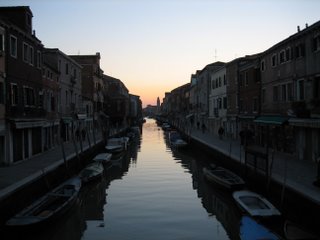
Twelve points for guessing the city.
Augustine writes: ‘But what do I love when I love you? Not the beauty of any body or the rhythm of time in its movement; not the radiance of light, so dear to our eyes; not the sweet melodies in the world of manifold sounds; not the perfume of flowers, ointments and spices; not manna and not honey; not the limbs so delightful to the body’s embrace: it is none of these things that I love when I love my God. And yet when I love my God I do indeed love a light and a sound and a perfume and a food and an embrace – a light and sound and perfume and food and embrace in my inward self. There my soul is flooded with a radiance which no space can contain; there a music sounds which time never bears away; there I smell a perfume which no wind disperses; there I taste a food that no surfeit embitters; there is an embrace which no satiety severs. It is this that I love when I love my God.’ (Confessions X.6.8)
Answer: When I love God I love the beauty of bodies, the rhythm of movements, the shining of eyes, the embraces, the feelings, the scents, the sounds of all this protean creation. When I love you, my God, I want to embrace it all, for I love you with all my sense in the creation of your love. In all the things that encounter me, you are waiting for me.
For a long time I looked for you within myself, and crept into the shell of my soul, protecting myself with an armour of unapproachability. But you were outside – outside myself – and enticed me out of the narrowness of my heart into the broad place of love for life. So I came out of myself and found my soul in my senses, and my own self in others.
The experience of God deepens the experiences of life. It does not reduce them, for it awakens the unconditional Yes to life. The more I love God the more gladly I exist. The more immediately and wholly I exist, the more I sense the living God, the inexhaustible well of life, and life’s eternity.
-Jürgen Moltmann, The Spirit of Life: A Universal Affirmation
(trans. Margaret Kohl, Fortress: 2001), 98.
What do you love when you love God? Do you side with Augustine or Moltmann? Why?
Ben Myers over at Faith and Theology has put together a list of his top twenty books that have influenced him theologically. Although these top twenty things are always somewhat arbitrary (especially the order!), and my most powerful theological influences have been personal relationships with mentors, teachers and lecturers, I've still tried taking up his challenge in the following list. Following Ben's lead, the list excludes books from other disciplines (more or less, though such lines can be hazy; I've included a Nietzsche) and is limited to one volume per author.
20. Karl Rahner, The Trinity
19. Merold Westphal, Overcoming Onto-theology
18. Irenaeus, Against Heresies
17. Dietrich Bonhoeffer, Life Together
16. T. F. Torrance, The Trinitarian Faith
15. Richard Bauckham, God Crucified
14. Miroslav Volf, Exclusion and Embrace
13. Oliver O’Donovan, Resurrection and Moral Order
12. Friedrich Nietzsche, Beyond Good and Evil
11. Athanasius, On the Incarnation
10. Jürgen Moltmann, The Coming of God
10. C. S. Lewis, The Great Divorce
9. John Stott, The Cross of Christ
8. Colin Gunton, The Triune Creator
7. N. T. Wright, Jesus and the Victory of God
6. Karl Barth, Church Dogmatics IV/1
5. Augustine, The City of God
4. Martin Luther, The Freedom of the Christian
3. J. Calvin, Institutes
2. Thomas Cranmer, Book of Common Prayer
1. Holy Scriptures
Have I forgotten something obvious? I'd love to hear which books or people have influenced you. And before I sound too pretentious (or heterodox!), a number of these books have influenced me as I've reacted against them and many remain as yet unfinished but have still been important.
In the world of late antiquity, Christianity encountered the Platonic dualism of soul and body in the form of the Gnostic contempt for the body, and its other-worldly longing for redemption. The soul, condemned to life-long incarceration in the body, yearns to be freed from this prison. It does not long for the prison to be changed into a home in which it likes to live. In this gnostic form, the Christian hope no longer gazes forward to a future when everything will be created anew. It looks upwards, to the soul’s escape from the body and from this earth, to the haven of blessed spirits.’
- Jürgen Moltmann, The Spirit of Life, 90.
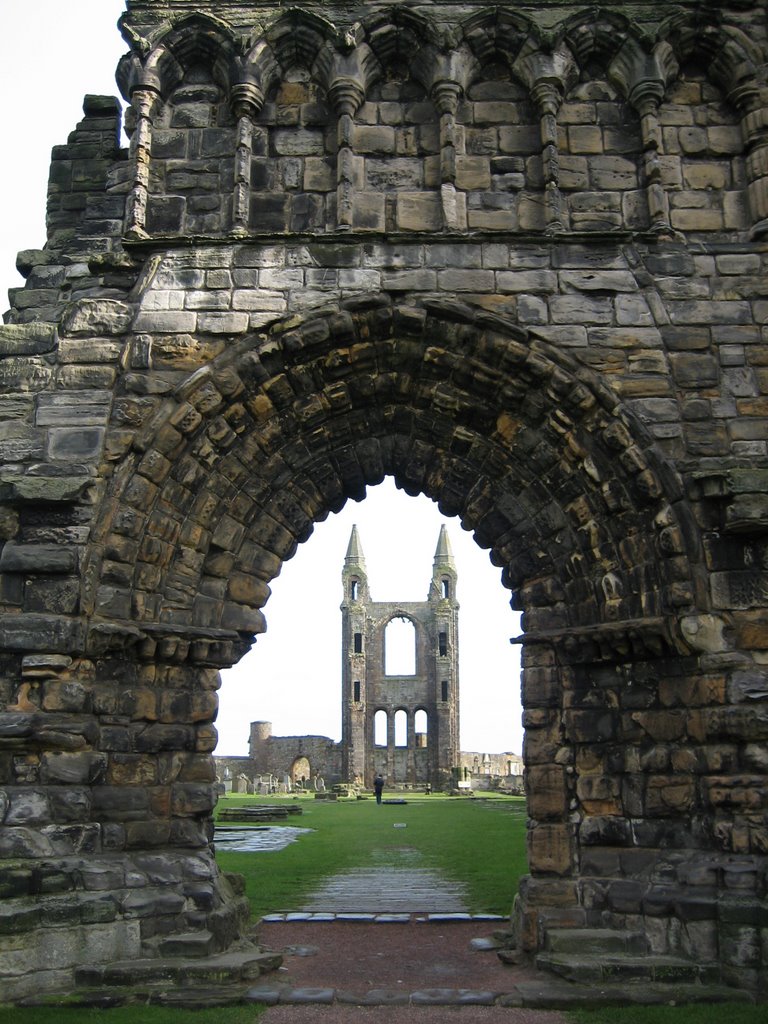
Ten points for naming the city whose medieval wall I was standing on to take this pic. I'm still updating the leaderboard and links for these points.
Christian faith starts from the assumption that it is impossible to reconcile life and death without the future of God. Should we accept death as a natural part of life? Then we must renounce love, which desires the life of the beloved and not his death. Should we renounce the body because it is mortal? Then we must renounce love altogether. If we accept death and if we repress death we cannot love life. Consciously or unconsciously, the knowledge of death destroys love’s ability to affirm life…. Surprising though it may sound, it is hope for the resurrection of the body which is the foundation and motivation for what Bonhoeffer called ‘Christianity’s profound this-worldliness’. It is precisely this hope which – contrary to what Nietzsche said – moves men and women to ‘remain true to the earth’, even in the face of individual, collective and universal death.
- Jürgen Moltmann, The Way of Jesus Christ, 264
Five points for the picture. It would be ten, but I think this one will be all-too-easy, especially since another well-known theo-blogger recently used an almost identical shot. An extra five points for saying who it was and providing a link.
"...But on the other hand, all this must inevitably mean that the man who thus hopes will never be able to reconcile himself with the laws and constraints of this earth, neither with the inevitability of death nor with the evil that constantly bears further evil. The raising of Christ is not merely a consolation to him in a life that is full of distress and doomed to die, but it is also God’s contradiction of suffering and death, of humiliation and offence, and of the wickedness of evil. Hope finds in Christ not only a consolation in suffering, but also the protest of the divine promise against suffering. If Paul calls death the ‘last enemy’ (I Cor. 15.26), then the opposite is also true: that the risen Christ, and with him the resurrection hope, must be declared to be the enemy of death and of a world that puts up with death. Faith takes up this contradiction and thus becomes itself a contradiction to the world of death. That is why faith, wherever it develops into hope, causes not rest but unrest, not patience but impatience. It does not calm the unquiet heart, but is itself this unquiet heart in man. Those who hope in Christ can no longer put up with reality as it is, but begin to suffer under it, to contradict it. Peace with God means conflict with the world, for the goad of the promised future stabs inexorably into the flesh of every unfulfilled present. If we had before our eyes only what we see, then we should cheerfully or reluctantly reconcile ourselves with things as they happen to be. That we do not reconcile ourselves, that there is no pleasant harmony between us and reality, is due to our unquenchable hope. This hope keeps man unreconciled, until the great day of the fulfillment of all the promises of God. It keeps him in statu viatoris, in that unresolved openness to world questions which has its origin in the promise of God in the resurrection of Christ and can therefore be resolved only when the same God fulfils his promise. This hope makes the Christian Church a constant disturbance in human society, seeking as the latter does to stabilize itself into a ‘continuing city’. It makes the Church the source of continual new impulses towards the realization of righteousness, freedom and humanity here in the light of the promised future that is to come. This Church is committed to ‘answer for the hope’ that is in it (I Peter 3.15). It is called in question ‘on account of the hope and resurrection of the dead’ (Acts 23.6). Wherever that happens, Christianity embraces its true nature and becomes a witness of the future of Christ...."
- Jürgen Moltmann, Theology of Hope, 7.
The full introduction to this important book can be found online here. The next (and almost last) post in my heaven series will pick up on these ideas.
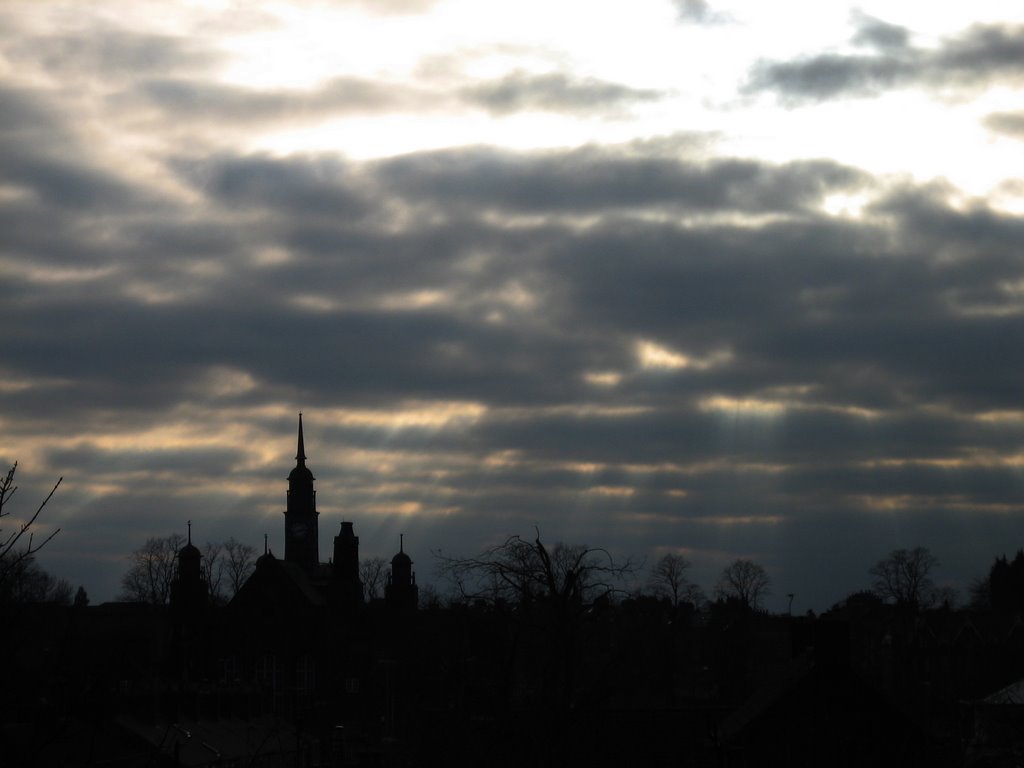
Ten points for picking which city this ruin lies a few minutes outside of.
The thought of death and life after death is ambivalent. It can deflect us from this life, with its pleasures and pains. It can make life here a transition, a step on the way to another life beyond - and by doing so it can make this life empty and void. It can draw love from this life and deflect it to a life hereafter, spreading resignation in 'this vale of tears'. The thought of death and a life after death can lead to fatalism and apathy, so that we only live life here half-heartedly, or just endure it and 'get through'. The thought of a life after death can cheat us of the happiness and the pain of this life, so that we squander its treasures, selling them off cheap to heaven. In that respect it is better to live every day as if death didn't exist, better to love life here and now as unreservedly as if death really were 'the finish'. The notion that this life is no more than a preparation for a life beyond, is the theory of a refusal to live, and a religious fraud. It is inconsistent with the living God, who is 'a lover of life'. In that sense it is religious atheism.
Jürgen Moltmann, The Coming of God, 49-50.
I've posted the end of this quote before. I thought I'd re-post a fuller version as I get into this series on heaven. While this life remains filled with frustrations and futility, if we think the solution is to slander or ignore it, we've missed the point. Sure, there will be radical discontinuity (see also a future post on 2 Peter 3), but it is this world that was declared good, very good. God has not given up on it, as is clear from Jesus' resurrection.
Series: I; II; IIa; III; IV; V; VI; VII; VIII; IX; X; XI; XII; XIII; XIV; XV; XVI. Ten points for pic (hint).
The resurrection hope makes people ready to live their lives in love wholly, and to say a full and entire Yes to a life that leads to death. It does not withdraw the human soul from bodily, sensory life; it ensouls this life with unending joy. In expectation of the resurrection of the dead, the person who hopes casts away the soul's protective cloak in which the wounded heart has wrapped itself, so as not to let anything more come near it. We throw ourselves into this life and empty ourselves into the deadly realm of non-identity by virtue of the hope that God will find us in death, and will raise us and gather us.
- Jürgen Moltmann, The Coming of God, 66
Ten points for which Sydney suburb this pic was taken in.
But Christian eschatology has nothing to do with apocalyptic ‘final solutions’ of this kind, for its subject is not ‘the end’ at all. On the contrary, what it is about is the new creation of all things. Christian eschatology is the remembered hope of the raising of the crucified Christ, so it talks about beginning afresh in the deadly end.
Jürgen Moltmann, The Coming of God, Preface.
If you'd like the full quote, try here. PS Ten points for the first to correctly locate this beautiful statue. UPDATE: This post generated significant comments, and eventually, another post.
Byron is a husband, and father of two small children. He keeps worms, bees and a compost pile, with a small garden to justify them.
In his spare time, he is an ecological ethicist, author, activist, speaker, assistant minister and postgraduate student.




 Posts
Posts