Sunday, September 10, 2006

Exit Mundi

The end of the world is nigh! And this site catalogues and analyses over fifty ways it might happen. Some are quite amusing, some plain silly, some wildly speculative, some deadly serious. Some we don't have to worry about for another few billion years; some could be tomorrow.

Does trusting the one who raised Christ affect how we might think about such apocalyptic scenarios? Of course.

Does it guarantee that we don't need to think about blowing ourselves up (or consuming ourselves into a hothouse, or driving ourselves to destruction, or...) because God's in charge and wouldn't let it happen? Of course not.

Wednesday, September 06, 2006

Augustine on love and fear

He, then, is an enemy to righteousness who refrains from sin only through fear of punishment; but he will become the friend of righteousness if through love of it he avoids sin, for then he will be really afraid of sin. For the person who only fears the flames of hell is afraid not of sinning but of burning...

Augustine, Epistulae 145.4


Augustine argues that fear of punishment is only ever a first step in moral learning. Although a young child may refrain from hitting his brother because he fears a spanking,* there is a step forward when he fears disappointing his parents, and then another step when he fears hurting his brother. Also involved in the maturation process is coming to fear both the damage done to oneself and the affront to God when one wrongs a neighbour. To be a friend of righteousness is to hate evil because it is evil, not simply because God will judge the evildoer.

*More discussion of spanking here and here.

Tuesday, September 05, 2006

Enthusiastic about Empire?

'To rejoice in the extent of Empire is not a characteristic of good men.'

- Augustine, De civitate Dei IV.15.

Augustine goes on this chapter to speak of 'a happier state' in which there are 'a multitude of kingdoms in the world, as there are multitudes of homes in our cities.' He thinks that Empire becomes a grisly necessity to restrain greater evil at times: better the Pax Romana than chaos. Is this necessarily the case? Is empire/centralisation always the most effective way of minimising evil? Mightn't evil sometimes be restrained by a mulitiplicity of kingdoms, none of whom has the ability to exert its will on the others?

Either way, Augustine's take on Empire is far more pessimistic and limited than the glorious and benevolent spread of aqueducts, plumbing and democracy sometimes asserted of Rome and her modern daughters.
Important discussion in comments.

Monday, September 04, 2006

Blessed be the name... II

Does God have a name? Jesus Christ is Lord!
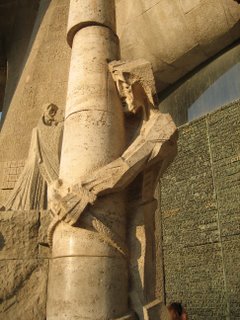
In my last post, I briefly discussed how in the Old Testament God revealed his name: YHWH. Yet out of respect, his people chose to call upon this one as Adonai, 'my Lord'.

Then came Al the Greek,* also known as Al the Great. And so people everywhere** started speaking Greek, including many of the scattered Jews (and not a few of the unscattered ones too). Before too long the Hebrew Scriptures (what Christians call the Old Testament) were translated into Greek. The translators, however, faced the issue of what to do with the divine name. Would they transliterate YHWH directly into Greek or continue Hebrew piety by using the Greek for 'lord' (kurios)? Not having the same symbolic resources as Hebrew (which could encode two words at once: one in the consonants, and another in the vowels), they opted for the latter and so rendered the name of God by using the title kurios.

*Yes, I know he was from Macedonia; save the hate-mail.
**Yes, I know - not everywhere.

However, kurios like adonai was a title, not a name. And so others were also called kurios: like Caesar. Indeed, even Israel's king (when she had had one), was called 'lord'.

Thus, it is no surprise that when Jesus comes and is recognised as Israel's Messiah, this title (kurios) is applied to him. He is king of Israel and so the common use of 'Lord Jesus' throughout the New Testament reflects this.

However, far more common than 'Lord Jesus' is 'Lord Jesus Christ' or 'Christ Jesus our Lord' or 'Jesus Christ our Lord'. Remember, 'Christ' is also a title, not simply Jesus' surname. Could 'Lord' then be implying more than simply 'Messiah'? Perhaps it is simply a redundant tautology, a way of emphasising Jesus' royalty as Son of David and true king of Israel? Possibly, but I suspect not.

To support this hunch, let's take a brief look at Isaiah 45.20-23:
Assemble yourselves and come together,
   draw near, you survivors of the nations!
They have no knowledge--
   those who carry about theur wooden idols,
   and keep on praying to a god that cannot save.
Declare and present your case;
   let them take counsel together!
Who told this long ago?
   Who declared it of old?
Was it not I, the LORD? [Was it not I, YHWH?]
   There is no other god besides me,
a righteous God and a Saviour;
   there is no one besides me.

Turn to me and be saved,
   all the ends of the earth!
   For I am God, and there is no other.
By myself I have sworn,
   from my mouth has gone forth in righteousness
   a word that shall not return:
"To me every knee shall bow,
   every tongue shall swear."
This is a classic statement of Jewish monotheism, in a section sounding a ringing critique of idolatry. There is Israel's God YHWH (=the LORD), and then there are pretenders to divinity, false alternatives. Now let's compare that with one of the most striking passages of the New Testament:
Christ Jesus, because he was in the form of God,
   did not regard equality with God
   as something to be exploited,
but emptied himself,
   taking the form of a slave,
   being born in human likeness.
And being found in human form,
   he humbled himself
   and became obedient to the point of death
   -- even death on a cross.

Therefore God also highly exalted him
   and gave him the name
   that is above every name,
so that at the name of Jesus
   every knee should bend,
   in heaven and on earth and under the earth,
and every tongue should confess
   that Jesus Christ is Lord,
   to the glory of God the Father.
Notice that what was God's exclusive right, shared with no other, is here given to Jesus. Jesus is included in the identity of the one God of Israel. He stands with Israel's God over against all created idols. And at precisely this point, it is the confession of Jesus Christ as kurios that is the clincher. Jesus is not simply lord as Messiah, though he is that. He is Lord, the one Lord, receiving the title reserved for YHWH alone.
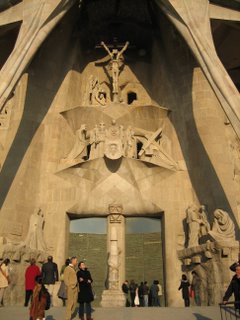
There is so much more that could be said coming out of this passage (and others like it). And so much more to be said about the identity of Jesus, about the name of God. But for the moment, we'll pause there, noticing that the summary confession of the gospel - Jesus Christ is Lord - answers not only the question "Who is Jesus?" but leads us directly into the further question, "So who then is God?"

PS I realise many of these thoughts are indebted to Bauckham, but I also owe their recent stimulation to some recent talks from Rowan Kemp at Refresh.


Friday, September 01, 2006

Welcome home Matheson

After a year drifting to and fro through the intellectual wilderness of Oxford, Dr Matheson Russell returns to fight the forces of evil closer to home. Welcome home, Matt!

PS This another chance for those friends who rarely or never comment. Don't be shy - leave Matt a message.

PPS Another pic of Matt.

Thursday, August 31, 2006

Blessed be the name...

YHWH and the LORD: does God have a name?
When you read the Bible, you might have noticed that in the Old Testament many versions put 'the LORD' at some points and 'the Lord' at others. Why is this?

It is a deliberate choice made by the translators, and reflects a different Hebrew word behind each option. In fact, where it says 'LORD', the Hebrew has the name of Israel's God: 'Yahweh'. Since Hebrew used to be written without vowels, the name is actually written just 'Yhwh' (sometimes people write it like this: YHWH), and 'Yahweh' is a best-guess for how it might have been said.

However, sometime along the track,* pious Israelites, who read the ten commandments and so knew that they shouldn't take God's name in vain, decided that the best way to avoid committing this sin was to never say the name (Yhwh) aloud at all.* That way, they could be sure that they would never misuse it (I don't think this move is either necessary nor sufficient, but I respect their reverence). So, instead of saying 'Yahweh' (or however they used to pronounce it), they would substitute the Hebrew word 'Adonai' (which means 'lord'),* or sometimes* 'Hashem' (which just means 'the name').
* I've generalised a little for simplicity; see here for a fuller explanation.

In later centuries, when they started adding vowels to written Hebrew, instead of adding 'a' and 'e' to YHWH (so that it read 'Yahweh'), they added the vowels from 'Adonai' (i.e. 'a', 'o' and 'a') in order to remind themselves that when they came across this word, they should say 'Adonai' (with the vowels) rather than 'Yahweh' (reading the consonants).

Incidentally, this why some people speak about God’s name as ‘Jehovah’, but you won’t find it in any modern translation. Sometimes the Hebrew letter yod is transliterated with a ‘j’ rather than a ‘y’, and sometimes the Hebrew letter waw is transliterated with a ‘v’ rather than a ‘w’. Thus, YHWH becomes JHVH. Then, when you add in the vowels from 'Adonai', you get JeHoVaH! So ‘Jehovah’ is a made-up name, a mistake made by those who didn’t realise that the vowels had been substituted. It would be a little like taking the vowels from 'Jesus' and putting them into the word 'God' to end up with ‘Gedu’.

Next: what happens in the New Testament?
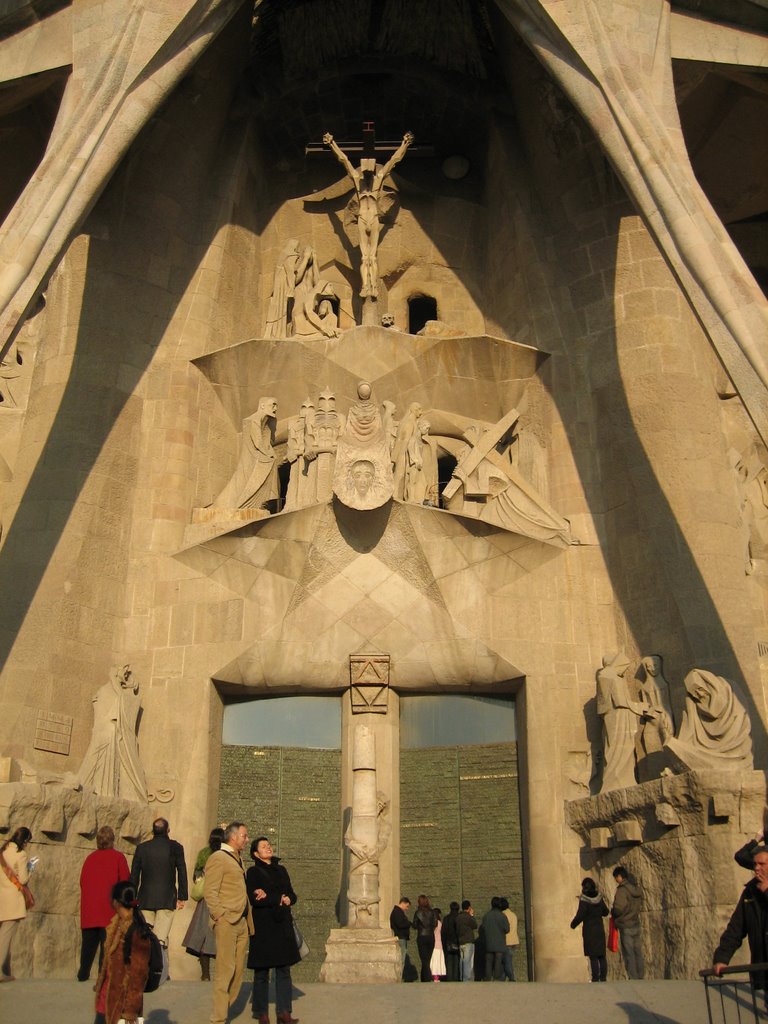
Ten points for picking which church door is pictured. Five more for which passage is quoted.

Tuesday, August 29, 2006

suppose

suppose
Life is an old man carrying flowers on his head,

young death sits in a café
smiling, a piece of money held between
his thumb and first finger

(i say "will he buy flowers" to you
and "Death is young
life wears velour trousers
life totters, life has a beard" i

say to you who are silent. - "Do you see
Life? he is there and here,
or that, or this
or nothing or an old man 3 thirds
asleep, on his head
flowers, always crying
to nobody something about les
roses les bluets
yes,
will He buy?
Les belles bottes - oh hear
, pas chères")

and my love slowly answered I think so. But
I think I see someone else

there is a lady, whose name is Afterwards
she is sitting beside young death, is slender;
likes flowers.

- e. e. cummings

Rubble is the future

"Rubble is the future. Because everything that is, passes. There is a wonderful chapter in Isaiah that says: grass will grow over your cities. This sentence has always fascinated me, even as a child. This poetry the fact that you see both things at the same time. Isaiah sees the city and the different layers over it, the grass, and then another city, the grass and then another city again."

- Anselm Kiefer, 2005

Is it still wasting time...

...on the internet if you're sick and 'relaxing' in order to get well?
Some silly & serious links for those short on internet material
• Boxlogies continues some fine insights, criticisms and suggestions about Middle East politics.
• The new CASE magazine came out this week. Had a couple of great reviews...
• Chris fails to self-censor, tries to offend Lutherans and ends up tango uniform. On a less frivolous note, I'm looking forward to the rest of his series on The use of Scripture in Christian Zionism.
• R.I.P. Pluto, unless Rick Warren gets his way... (H/t Alastair and Ben).
• Speaking of Alastair, here's his thoughts on why non-conformist evangelicals often don't like Anglicans (warning: written with the zeal of a convert).
• And speaking of Ben, don't forget that his thoroughly stimulating Theology for Beginners series continues (he's up to #9).
• Phillip Adams has an interesting take on Australian politics, and recognises along the way that neither side of politics has a monopoly on Christianity. I tried to make a similar point back here and generated my highest ever number of responses.

Thursday, August 24, 2006

The end of grace IV

The ultimate goal: the Father
I spoke at the start of this series about the end or goal of grace for humanity as a society liberated from fear, suffering and death, a city of creative possibilities.

But there is so much more to this perfection of humanity; there is the Father.

Christ is the centre of Christian thought (despite a previous whimsical post), because (as David rightly pointed out), all things are through him and for him and in him all things hold together. Or as Paul puts it elsewhere, it is through Christ that all things came and through him we live. Christology is centre, but the goal, the direction, the world's true telos is found in theology proper, in the Father: from whom all things came and for whom we live.

Christ's life, death and resurrection are rightly the centre of our knowledge of God, the centre of our hope, but even these were ultimately for the glory of God the Father. This gospel story, summarised in the phrase 'Jesus Christ is Lord', has a final chapter in which Jesus hands the kingdom back to the Father.

This end of grace ensures that grace doesn't end. There is always more to come...
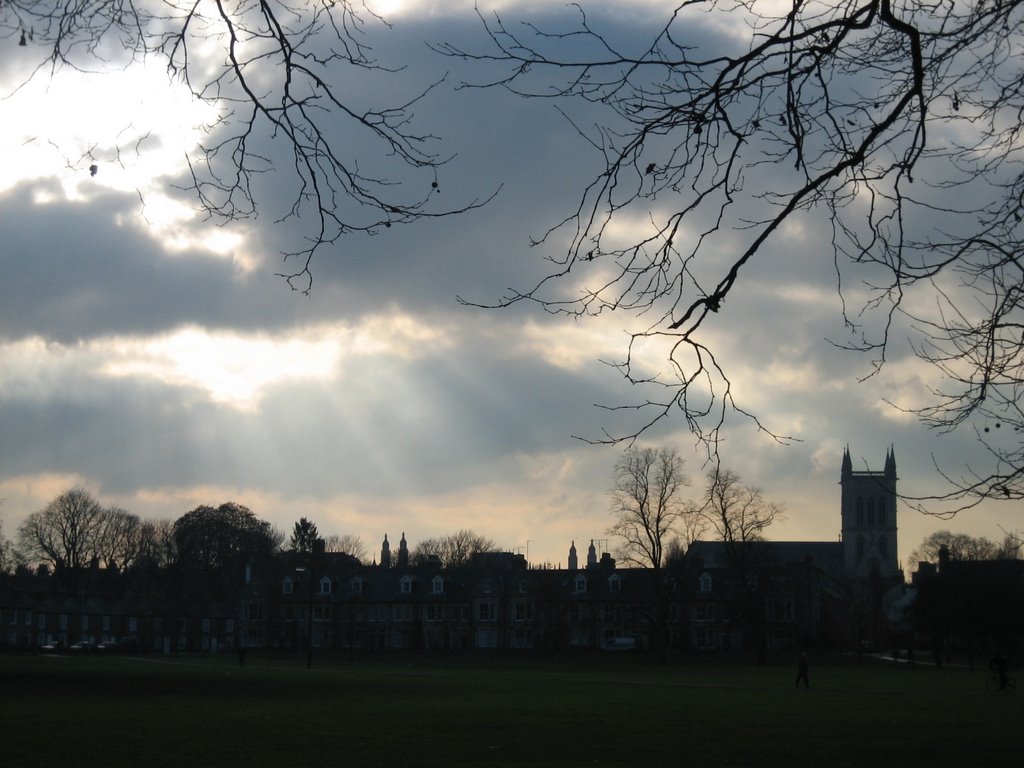
Important discussion in comments. Ten points for naming the town in this pic.
Series: I; II; III; IV.

Wednesday, August 23, 2006

The end of grace III

The graciously delayed end
I've been posting recently on grace and eschatology, or rather, grace in eschatology, or perhaps, eschatology as grace.

God takes his time with us. He is patient with us, not wanting anyone to perish, but everyone to come to repentence. At least from our perspective, there seems to be a chronic postponement or delay in God's decision to call a halt to the ongoing catastrophe of life ruled by death. However, this pause is actually itself motivated by grace. Strangely, while the end will be the culmination of God's free action to defeat evil and reclaim his world, that he doesn't make it happen now is also a gift. The temporal 'gap' between rebellion and its consequences might make rebels bold. The causal 'gap' (or at least inadequacy of correspondence) between those who perpetrate destruction and those who suffer as a result might lead to the prosperity of the wicked and the pain of the (relatively) innocent. But God's patience is motivated by his desire for human repentence. While the victim cries for justice, God commits their cause temporarily to fallible and provisional human courts - courts which not only often fail, but always must fail to provide the infinite justice that grief demands. This too is gracious: avoiding the destruction of society in a mounting storm of reprisals, a multiplying echo-chamber of vengeance. Abel's blood cries from the ground, but God graciously marks Cain to prevent human attempts at pre-empting final justice.

Final judgement delayed speaks of mercy; the guilty may turn aside from their fatal path and live. Provisional human judgements upon wrongdoing are a partial and often bitter gift. But the open question of the when of divine justice grates those who have received injustices. Mercifully pausing for the sake of the guilty, graciously providing for the continuance of human society despite grievances that threaten to tear it decisively apart, God reminds us that the victim is not the only party in need. The wrongdoer is threatened by internal disintegration, social recrimination, and divine wrath. Their plight is dire indeed, and without the merciful space afforded by divine delay and the limits set upon human retribution, the self-destructive logic of their acts would itself bring about a catastrophic end.

Yet where is God's grace for the victims? How long will they have to wait for their day of vindication? Sorrowful concern for the sinner comes after righteous indignation for the sinned against. What gift does God have for them? How is the gospel good news for the poor and oppressed? The blood of Abel still cries, as does the shed blood of all the martyrs, innocents and wronged: 'how long, O Lord?'

But there is a better word than the blood of Abel. The cry of those faithfully leaving room for God's vengeance is not forgotten. But it is not answered on its own terms either. The sprinkled blood of Christ is a better word than the victim's cry for vengeance. God's justice involves not simple and immediate retribution, but a gracious sacrifice made on behalf of wrongdoers. For God's desire is that none should perish. He asks the victims to relinquish their demands, or at least to let them be transformed in the light of divine wisdom. He asks for trust: that his dealing with wrongdoers will satisfy the wronged.

Does he then go easy on the perpetrator while asking the victim to lower her expectations? Must she exchange her thirst for retribution and accept God's reforming work in the criminal instead? A partial answer is that the wrongdoer does not avoid death through repentence, but accepts co-crucifixion with Christ. But this is not the full answer. God's eschatological justice has arrived and been executed upon Calvary, but it remains hidden - as Christ is hidden. In Christ, God has begun graciously satisfying both victim and offender.

But grace is not over yet. There is more yet to come...
Series: I; II; III; IV.

Moltmann: Resurrection and life now

The resurrection hope makes people ready to live their lives in love wholly, and to say a full and entire Yes to a life that leads to death. It does not withdraw the human soul from bodily, sensory life; it ensouls this life with unending joy. In expectation of the resurrection of the dead, the person who hopes casts away the soul's protective cloak in which the wounded heart has wrapped itself, so as not to let anything more come near it. We throw ourselves into this life and empty ourselves into the deadly realm of non-identity by virtue of the hope that God will find us in death, and will raise us and gather us.

- Jürgen Moltmann, The Coming of God, 66

Ten points for which Sydney suburb this pic was taken in.

Tuesday, August 22, 2006

Eschatology and the One Ring

I've always suspected that eschatology (or here or here) is a little like the One Ring of theology...

One Ring to rule them all, One Ring to find them,
One Ring to bring them all, and in the new light bind them


... or not?

(H/T Daniel at Sibboleth for sparking this thought). NB: important discussion in comments.

"Two men went up to the temple..."

"Two men went up to the temple to pray. The first was a Pharisee, and the second a publican. And the publican stood up and prayed like this: O God, I thank thee that I am not as other men are: two-faced, holier-than-thou, proud, arrogant, self-righteous, or even as this Pharisee. And the Pharisee would not even lift up his eyes to heaven, but beat upon his breast and said: Lord, have mercy on me, a hypocrite."

-N. T. Wright, Small Faith—Great God, 1978. H/T Alastair.

Monday, August 21, 2006

Unexpected windfall

Thanks to Ben for his generosity and for being clever enough to have a similar sense of humour.

PS His series on 'Theology for Beginners' is also progressing nicely and looks set to become a very useful little resource.

The end of grace II

The Trinitarian foundations of an eschatology of grace.
After a pause, I return to my theme of grace in the end. I began with some thoughts on the end as a free gift for humanity. Of course, despite - or actually, because of - their eschatological theme, these thoughts are intended as reflections upon the way, not as pronouncements from the end.

What is grace? Not a thing, but a reason, a motivation, a desire. Or perhaps, the lack of a reason. That the end is all of grace means that it is brought about by the free act of God. Divine freedom is not conditioned or constrained by anything outside the love of Father : Son : Spirit.

So perhaps better than grace as lack of reason, is grace as superabundance of reason, but reasons located within the Trinitarian life. A free gift does not arise from fear. God's grace is not driven, a chasing after. God's acts towards us are free because of the overflowing joyful love of the Father for the Son, Son for Spirit, Spirit for Father - and back again: 'You are my Son, the beloved; in you I am well pleased.' The Father's affirmation of the Son as he begins his task of restoring and renewing the world is thus the basis for Christian hope. At the same point, the Spirit rests upon the Christ in bodily form as a dove as an indication of the unity of the Trinity in this task, bound together not by the world's need, but in common love, fellowship, koinonia. The Father's work undertaken by Christ in the Spirit is therefore gracious, arising from the very identity of God, not through an external constraint or debt owed to his creatures.

And the corollary is that the Son delights to do his Father's work:

At that same hour Jesus rejoiced in the Holy Spirit and said, 'I thank you, Father, Lord of heaven and earth, because you have hidden these things from the wise and the intelligent and revealed them to infants: yes, Father, for such was your gracious will. All things have been handed over to me by my Father; and no one knows who the Son is except the Father; or who the Father is except the Son and anyone to whom the Son chooses to reveal him.'

- Luke 10.21-22

The closed circle of divine knowledge in which only the Father knows the Son and the Son the Father is the basis for all human knowledge of God. Who Jesus is and what he does are closed to those who don't know the Father. Who God is and what he does is closed to those who don't know the Son. It is only by an initiative from the divine side, from inside the circle, that we can know anything at all. This is why our hope is based on divine grace. Without the final startling exception (and anyone to whom the Son chooses to reveal him) we would remain ignorant of God and his promises.

Since it was not our goodness or need or failure to disqualify ourselves that resulted in God's action, we need have no fear that humanity can thwart God's intentions. Indeed, the very point at which the powers of humanity against God were at their strongest was the very point at which God achieved the centre of his purpose (Acts 2.23): what we intended for evil, God nonetheless used for good (cf. Gen 50.20).

God's love for the world, the love that resulted in his sending his Son so that whoever believes may have the life of God's coming age (John 3.16), is not based on the worth of the world, but on the faithfulness and joy found within the fulness of Father : Son : Spirit. And that love is never exhausted.

Grace is not over yet. There is more to come...
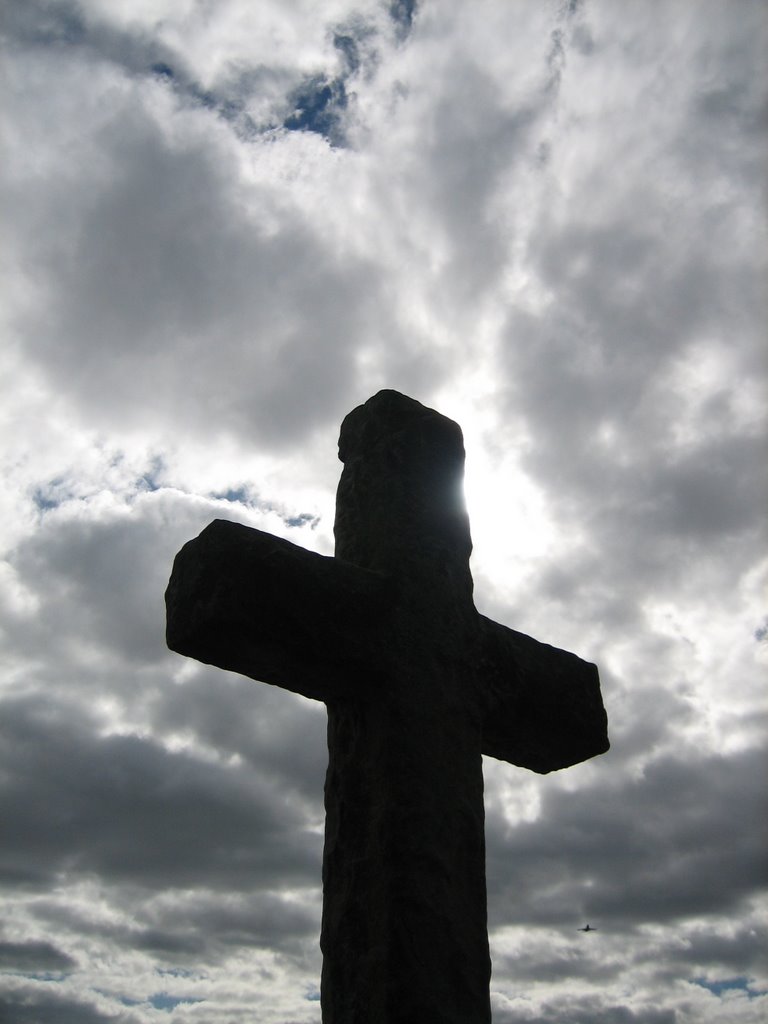
Eight points for the first to link to another shot of this cross.
Series: I; II; III; IV.

Thursday, August 17, 2006

Happy Birthday Jessica!

My beautiful wife turns a year older today.

Feel free to share your thoughts on or for the birthday girl in comments.
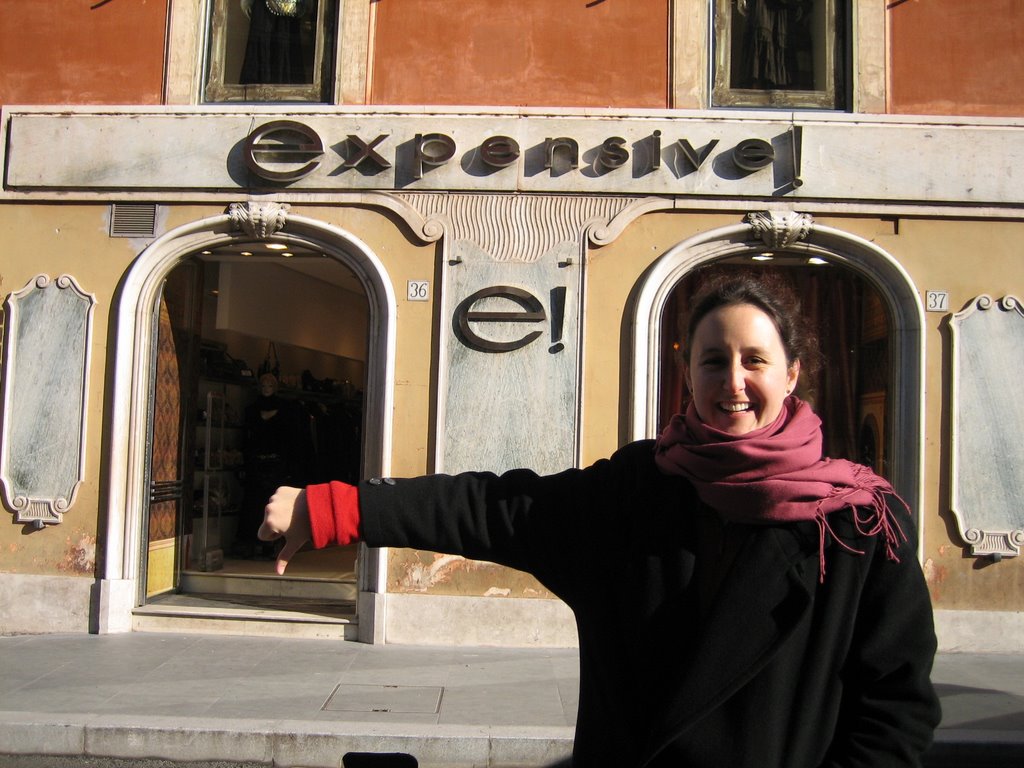
And, of course, ten points for the location of each photo.

Wednesday, August 16, 2006

O'Donovan: Resurrection and renewal

Wonderful O'Donovan quote
"It might have been possible, we could say, before Christ rose from the dead, for someone to wonder whether creation was a lost cause. If the creature consistently acted to uncreate itself, and with itself to uncreate the rest of creation, did this not mean that God's handiwork was flawed beyond hope of repair? It might have been possible before Christ rose from the dead to answer in good faith, Yes. Before God raised Jesus from the dead, the hope that we call 'gnostic', the hope for redemption from creation rather than for the redemption of creation, might have appeared to be the only possible hope. 'But in fact Christ has been raised from the dead...'. That fact rules out those other possibilities, for in the second Adam the first is rescued. The deviance of his will, its fateful leaning towards death, has not been allowed to uncreate what God created.
...
"The resurrection carries with it the promise that 'all shall be made alive'. The raising of Christ is representative, not in the way that a symbol is representative, expressing a reality which has an independent and prior standing, but in the way that a national leader is representative when he brings about for the whole of his people whatever it is, war or peace, that he effects on their behalf. And so this central proclamation directs us back also to the message of the incarnation, by which we learn how, through a unique presence of God to his creation, the whole created order is taken up into the fate of this particular representative man at this particular moment of history, on whose fate turns the redemption of all. And it directs us forward to the end of history when that particular and representative fate is universalized in the resurrection of mankind [sic] from the dead. 'Each in his own order: Christ the first fruits, then at his coming those who belong to Christ'. The sign that God has stood by his created order implies that this order, with mankind [sic] in its proper place within it, is to be totally restored at the last."

- Oliver O'Donovan, Resurrection and Moral Order, 14-15.

Usually, my quotes come with a caveat, but not this one. This expresses very much where I presently stand. The picture is from a hill to the south overlooking Firenze.

Friday, August 11, 2006

The end of grace I

The end is a free gift for humanityPrologue: from garden to garden city
The Bible ends with a vision of a city: a glorious picture of human relationships and interdependence, of action and rest, of productive peace between difference, of 'healing for the nations'. A huge city filled with life. This is not a city that relies upon exploiting the surrounding countryside, pushing the land to produce more than it is able to sustain: this city exports life-giving fruit twelve months a year. This is not a city that needs to huddle together for fear of the extremes of nature, nor one threatened by invasion. It is not fractured with internal division, nor oppressed by monotonal uniformity.

Is this the original utopia? No, because this end is 'of grace' - not that grace comes to an end, but that this end is the result of God's free gift. Just as Jesus was 'of Nazareth' and Saul was 'of Tarsus', so this end is 'of grace'. This city is not built with human hands, is not a realised utopian vision of human progress. It comes down from heaven, signifying the divine origin of its establishment and the source of its life.

There is another famous city at the other end of the Bible: Babel. In it human hubris reaches for the heights. Its skyscraping was not for maximising office space, but for forging a link between earth and the heavens from the human side upwards. Ever since, urban development has been an ambivalent achievement: drawing people together, increasing possibilities, maximising human creative and productive potential; yet also dislocating communities, atomising individuals, disintegrating ecosystems. The cities of the world are at once humanity's greatest achievements and our most painful failures.

John's vision of the end is all about grace. It is achieved not by human effort but is a gift from the riches of divine love. It does not come with the achievements of the powerful, nor will it be hindered by the failures of the weak. It is an environment for humans, and for a large and complex human society. For it is the fulfilment of the central thread and hope of the biblical narrative: the divine promise 'I will be with you.' The city is a picture of the final result of God's action: not that we depart to live with him, but that he comes to dwell with us, in our kind of space, though one that he himself has supplied.

This is the start of the end of grace. There is more to come...
Ten points for picking the location from which this pic was taken.
Series: I; II; III; IV.

Thursday, August 10, 2006

Grace in the end

Eschatology is founded upon and directed towards God's grace revealed and promised in Jesus Christ by the Spirit.

This has been my basic assumption and message in the blog thus far (particularly those key posts marked with an asterix down on the right). After receiving some helpful critical feedback about my tone, direction and focus, I would like to commit afresh to posts that:

• Focus on an eschatology of grace
While not exclusively eschatological, or even exclusively theological, I'd like this to be the integrating theme.

• Are exegetically engaged and engaging
As Barth's final advice to his students so memorably put it, exegesis is the heartbeat of theology. While not every claim needs to have all its working shown, I apologise if I've succumbed too often to the temptation of unexplained theological shorthands. I read a good analogy last night: slogans and shorthands are briefcases into which a whole theological narrative can be packed for convenient travel. But the point is to unpack it when you arrive, rather than engage in a squabble where each sides hits the other over the head with a briefcase.

• Contain exegesis of my assmptions as well as Scripture
Similarly, I apologise if I haven't always been as transparent about my own working assumptions as I could have been. We can never escape having them, and must always struggle to articulate and remain conscious of them. Revisable and provisional, they remain an enabling condition of all communication and living.

• Include more links between posts
Since reading a blog is the reverse of reading a book (thanks Adrian), it is possible to have a reading experience in which one arrives at conclusions without consciousness of the arguments on which they are founded. If you are new to reading blogs, be gracious, extending charitable assumptions towards the blogger that somewhere, somehow this crazy point might already be explained (or shown to be satirical!). And I'll try to do my part.

• Are constructive as well as critical
It's easy to take pot shots from the sidelines, harder to suggest an alternative. Again, apologies if you feel I've been indulgent in this respect. Time to stick my neck out a little more; feel free to have a swing (esp if you'll then take your turn on the block!).

• Occasionally involve kite-flying, satire and links
Not every link is an endorsement; some are there for illustration or opposition rather than support. Not every post is to be taken as a monological declaration of truth. While I'm writing on the 'final' things, this blog is certainly not a final word. Come and join the conversation. I won't bite (unless requested).

• Often have pictures
They seem to be popular. And hey, they're often the best thing about my posts. Ten points for the location above.

• Are gracious in tone and manner, as well as content
I like those bumper stickers that say 'My driving is on display; please call XYZ if you would like to comment.' Consider yourselves invited to comment not only on what I post, but how I post it.

One of the things I like most about John Piper is the title of one of his books: The Purifying Power of Living by Faith in Future Grace. The future of grace: that's where we'll be headed for the next little while. Feel free to join me.
Ten points for naming the city in the pic above.

Tuesday, August 08, 2006

News from around the globe/corner

Some links and personal updates
NT scholar and blogger Ben Witherington has seen a movie and written a review that does (at much greater length) what I've been hinting at over the last few weeks: draw links between eschatology and attitudes to the environment.

Geoff has started a new blog, with a great post on new beginnings.

Nic got published in SMH Good Weekend.

I've recently realised that there are a whole host of MTC bloggers:
Faculty: MPJ, Thommo*.
4th yr: Paget*, Geoff, Mandy
3rd yr: Seamus, Bec, David, Mark, Naomi, Marty*, Russ*.
2nd yr: Ben, Dani, Gavin.
1st yr: Ang, Ben, Craig, Josh, Rebekah.
Let me know of any more!
*P-plate bloggers: will they put in the hours to get their licence?

The overplayed rivalry between USyd and UNSW (and between EU and CBS) has been ignored in the latest move from CBS, inviting Robert Forsyth and Ian Powell to speak at their current mission.

New CASE site. CASE = Centre for Apologetics Study and Education. I'll be giving a couple of lectures over the next few weeks at a CASE course called "Christianity and Contemporary Thought". All welcome: Tuesdays 5-6pm New College UNSW, by donation.

Ben is starting a series on Theology for Beginners. He's just posted his 21-part outline.

Annette has arrived in Freiburg, the eco-city.** To celebrate, she's started a new blog for Freiburger photos.

**From Wikipedia: Freiburg is known as an "eco-city". In recent years it has attracted solar industries and research; the Greens have a stronghold here (the strongest in any major German city; up to 25% of the votes city-wide, in some neighbourhoods they reached 40% or more; figures from the 2002 national elections). The newly built neighbourhoods of Vauban and Rieselfeld were developed and built accordingly to the idea of sustainability. The citizens of Freiburg are known in Germany for their love of cycling and recycling. ...
In June 1992, the Freiburg city council adopted a resolution to the effect that it would only permit construction of "low energy buildings" on municipal land. All new housing must comply with the low energy guidelines. Low energy housing uses solar power passively as well as actively. In addition to solar panels and collectors on the roof, providing electricity and hot water, many passive features use the sun’s energy to regulate the temperature of the rooms.